You are currently viewing SemiWiki as a guest which gives you limited access to the site. To view blog comments and experience other SemiWiki features you must be a registered member. Registration is fast, simple, and absolutely free so please,
join our community today!
WP_Term Object
(
    [term_id] => 157
    [name] => EDA
    [slug] => eda
    [term_group] => 0
    [term_taxonomy_id] => 157
    [taxonomy] => category
    [description] => Electronic Design Automation
    [parent] => 0
    [count] => 4613
    [filter] => raw
    [cat_ID] => 157
    [category_count] => 4613
    [category_description] => Electronic Design Automation
    [cat_name] => EDA
    [category_nicename] => eda
    [category_parent] => 0
    [is_post] =>
)
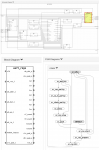
Ask any hardware or software engineer working on a product, and they will tell you that writing documentation is a pain. Customers have high expectations for user manuals and reference guides, usually requiring a team of technical writers to satisfy their requirements. In order to meet time-to-market deadlines, documentation… Read More
I recently wrote about a ClioSoft® study with Google on using cloud platforms for EDA design and the importance of using persistent storage when doing that. ClioSoft will again be sharing important information on design productivity in the upcoming webinar, Reusing Your IPs & PDKs Successfully With Cadence® Virtuoso®. … Read More
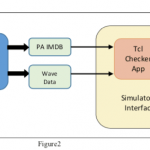
Electronic design automation has evolved to an extent that the complex chips with tens of billions of transistors frequently produce first pass functional prototypes from the manufacturer. What makes this so incredible is that such a small portion of the possible states of electronic operation are actually tested in the simulation… Read More
Synopsys just announced the availability of their IP solution supporting CXL (Compute Express Link). This new protocol is going to be an important component for several applications expected to be shipping starting in 2021. CXL is an alternate protocol that runs on the same physical layer as PCI Express (PCIe). Among other usages,… Read More
OK – maybe that sounds a little weird, but it’s not a bad description of what Mentor suggests in a recent white-paper. There are at least three aspects to power verification – static verification of the UPF and the UPF against the RTL, formal verification of state transition logic, and dynamic verification of at least some critical… Read More
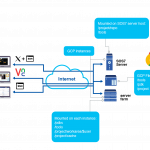
When EDA users first started considering using cloud services from Google, Amazon, Microsoft, and others, their initial focus was getting access for specific design functions, such as long logic or circuit simulation runs or long DRC runs, not necessarily for their entire design flow. If you choose to use the cloud this way, you… Read More
RTLvisionPRO has proven to be an indispensable tool which has greatly improved the productivity and work-flow of our current task: understanding, verifying, and documenting the existing RTL IP library at our company. Consisting of about 500 Verilog and VHDL files, the library has been under development for several years and… Read More
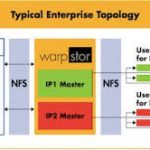
With every process node and every SOC design, engineering and IT teams are experiencing an unprecedented data explosion. User workspaces routinely exceed 10’s of GB and sometimes even 100’s of GB. Regression runs, characterization runs, design and debug of workspaces, building verification environments – all of these… Read More
My first IC design back in 1978 was a DRAM and it ran on 12V, 5V and -5V, but then my second DRAM was using only a 5V supply. Today we see SOCs running under a 1V supply voltage, but there is a totally different market for power devices that are at the other end of the voltage spectrum and they handle switching ranges from 12V – 250V. … Read More
When I was at Atrenta, we took advantage of opportunities to expand our static tool (aka linting) first to clock domain crossing (CDC) analysis and DFT compatibility and later to static analysis of timing constraints, all of which have importance in implementation. CDC is commonly thought of as an RTL-centric analysis, however,… Read More










The silent killer of analog reliability: Why SPICE misses floating net