You are currently viewing SemiWiki as a guest which gives you limited access to the site. To view blog comments and experience other SemiWiki features you must be a registered member. Registration is fast, simple, and absolutely free so please,
join our community today!
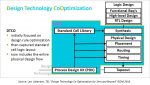
SLiC Library tool dramatically accelerates DTCO for 3nm and beyond
In advanced technology nodes below 10nm, Design and Process Technology development have become increasingly intertwined. In older nodes the traditional technology roll-out was done mostly in a sequential manner with clear geometry scaling targets set by … Read More
The semiconductor industry lost another good one last week, my friend, co-worker, and longtime SemiWiki contributor, Randy Smith. Randy published sixty blogs on SemiWiki over the last eight years that have been viewed more than a half million times. That is quite a digital legacy, absolutely.
Like myself, and many other semiconductor… Read More
Howie began his career at Digital Equipment Corporation working on real-time device drivers, but within a few years started working at the other end of the stack with one of the pioneering electronic mail systems. Since then, Howie has worked on developing systems involving electronic mail, workflow processing, configuration… Read More
Now that the dust has settled and I’m out of cronovirus quarantine let’s talk about the Intel and AMD conference calls. Unfortunately, the Intel and AMD marketing teams are still outpacing engineering so it is difficult to write something serious but I will do my best.
Spoiler Alert: Both CEOs disappoint.
First an Intel 10nm update:… Read More
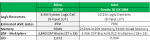
The next generation FPGAs have been announced, and they are BIG! Intel is shipping its Stratix 10 GX 10M FPGA, and Xilinx has announced its VU19P FPGA for general availability in the Fall of next year. The former is expected to support about 80M ASIC gates, and the latter about 50M ASIC gates. And, to bring this mind-boggling gate… Read More
Our friends at Threshold Systems have a new class that may be of interest to you. It’s an updated version of the Advanced CMOS Technology class held last May. As part of the previous class we did a five part series on The Evolution of the Extension Implant which you can see on the Threshold Systems SemiWiki landing page HERE. And… Read More
FPGAs, today and throughout the history of semiconductors, play a critical role in design enablement and electronic systems. Which is why we included the history of FPGAs in our book “Fabless: The Transformation of the Semiconductor Industry” and added a new chapter in the 2019 edition on the history of Achronix.
In a recent blog… Read More
There is a live CEVA webinar coming up that you will NOT want to miss. We have been working with CEVA since 2012 and have posted 130 collaborative blogs. Those blogs have earned 927,901 views thus far and counting. The average blog on SemiWiki.com gets 5,885 views so they are ahead of the game.
One of the reasons CEVA is so popular on SemiWiki
…
Read More
After returning from a week in Southern China I found the TSMC Q4 2019 conference call even more interesting. In China they are preparing for the New Year’s Celebration so everything is very festive but what struck me hardest was the massive investment in infrastructure and security. Semiconductors are of course a big part… Read More
Siemens today announced a partnership with Arm to “accelerate the future of mobility by redefining design capabilities for complex electronic systems”. I spent time with David Fritz to understand what this really means. You may remember David from our webinar PAVE360: Of SoCs, Digital Twins, and Validating Autonomous Vehicle… Read More















Captain America: Can Elon Musk Save America’s Chip Manufacturing Industry?