You are currently viewing SemiWiki as a guest which gives you limited access to the site. To view blog comments and experience other SemiWiki features you must be a registered member. Registration is fast, simple, and absolutely free so please,
join our community today!
All the hubbub about FPGA-accelerated servers prompts a big question about cache coherency. Performance gains from external acceleration hardware can be wiped out if the system CPU cluster is frequently taking hits from cache misses after data is worked on by an accelerator.
ARM’s latest third-generation CoreLink CMN-600 … Read More
When you looked at a chip in the past you primarily were concerned with two things: the speed of the chip, usually expressed in GHz, and how much power it consumed. Today the IBM engineers preparing the newest POWER chip, the 14nm POWER9, are tweaking the chips for the different workloads it might run, such as cognitive or cloud, and… Read More
Low power is now a goal for most digital circuit designs. This is to reduce costs for packaging, cooling, and electricity; to increase battery life; and to improve performance without overheating. I talked to the experts on physical design for ultra-low power at Mentor Graphics recently about the challenges to P&R tools and… Read More
Floating-point computation has been a staple of mainframe, minicomputer, supercomputer, workstation, and PC platforms for decades. Almost all modern microprocessor IP supports the IEEE 754 floating-point standard. Embedded design, for reasons of power and area and thereby cost, often eschews floating-point hardware… Read More
Once a year, during the TSMC’s Open Innovation Platform (OIP) Forum you can expect to see cutting edge technical achievements by TSMC and their partners. This year was no exception, with Open-Silicon presenting its accomplishments in implementing an HBM reference design in 16nm. It’s well understood that HBM offers huge benefits… Read More
There was a comment recently that design for low power is not an event, it’s a process; that comment is absolutely correct. Power is affected by everything in the electronic ecosystem, from application software all the way down to layout and process choices. Yet power as a metric is much more challenging to model and control than … Read More
Cache evolved when the world was all about homogeneous processing and slow and expensive shared memory. Now, compute is just part of the problem – devices need to handle display, connectivity, storage, and other tasks, all at the same time. Different, heterogeneous cores handle different workflows in the modern SoC, and the burden… Read More
There are always debates on who does what best in the semiconductor industry, but most agree that Intel is the best in process and transistor technology. This leadership has served the company extremely well over the last few decades and allowed them to reach a position of dominance in the PC and server semiconductor markets. In … Read More
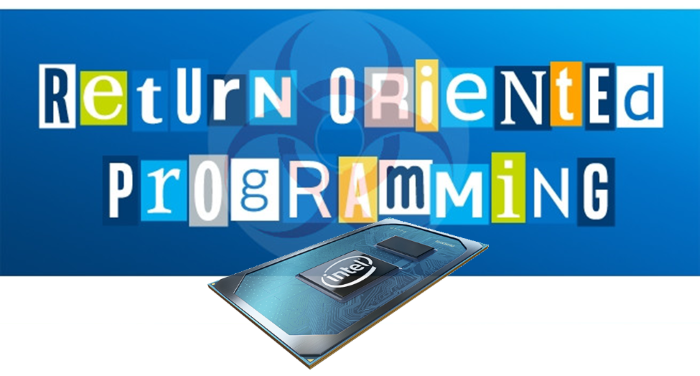
IBM recently announced a software-oriented solution to help eradicate Return Oriented Programming (ROP) malware attacks. ROP is a significant and growing problem in the industry. Crafty hackers will use snippets of code from other trusted programs and stitch it together to create their attacks. It has become a very popular… Read More
Why do we think we have privacy in our cars? Why does the government believe there is an interest in preserving privacy in cars? Can we just get over it? One of the least private places known to mankind – outside of the Internet – is the car!
But our transportation regulators in the U.S. and their counterparts at the European Commission… Read More










Enhancing Multi-Domain System Simulation with FMI Co-Simulation