Last month, eMemory Technology hosted a webinar titled “eMemory’s Embedded Logic-NVM Solution for AI Chips.” While the purpose was to present their embedded Logic-NVM solution, the webinar nicely sets the stage by highlighting Analog NVM’s value as it relates to neural networks. Of course, the algorithms of neural networks… Read More
Cornami is an interesting company. Their leader is also an interesting person. I’ve interviewed Wally Rhines many times on various topics. All of them have been big hits. Cornami is focused on enabling fully homomorphic encryption (FHE) in a commercially viable and widespread manner. Many say this isn’t possible, but Wally and… Read More
As we established last year, we will use the January issue of this blog to look back at the papers we reviewed last year. We lost Jim Hogan and the benefit of his insight early last year, but we gained a new and also well-known expert in Raúl Camposano (another friend of Jim). Paul (GM, Verification at Cadence), Raúl (Silicon Catalyst,… Read More
It’s that time again. ESDA has recently released the numbers for Q3, 2021. Industry revenue increased 17.1% year-over-year from $2,953.9 million to $3,458.1 million in Q3 2021. The four-quarter moving average, which compares the most recent four quarters to the prior four, rose 16.1%. Further, the companies tracked… Read More
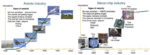
From the perspective of all time for recorded human history, the last 300 years (a blink on that time scale) has seen incredible, life-changing and world-changing advances. Water and steam-driven machines first showed up in the 1700s. This is often called Industry 1.0. Powered assembly lines in the late 1800s became Industry … Read More
I’ve followed the enthusiastic market acceptance of FPGA chips over the decades, and even semiconductor companies like Intel acquired Altera, while AMD tries to acquire Xilinx. The idea of field programmable logic makes a lot of sense for use in systems designs today, and it was inevitable that a company like Menta would… Read More
CMOS Forever?by Asen Asenov on 01-16-2022 at 6:00 amCategories: General
Today, the CMOS chip manufacturing is the pinnacle of the human technology defining economy, society and perhaps us as modern humans. This was highlighted by the recent chip shortage, followed by the ‘shocking’ realization that more than 80% of all chips are manufactured in the Far East.
Important decisions need to be taken by … Read More
Dan is joined by Malcolm Penn, long-term semiconductor industry veteran and founder of Future Horizons, Dan and Malcolm review their last discussion on 2021 forecasts, which produced aggressive numbers many said were too optimistic. Their predictions turned out to be on the mark.
They also explore the topic of 2022 -what … Read More
Investing in semiconductor startups is something Silicon Catalyst knows a lot about. During a time when venture funding for chip companies all but disappeared, this remarkable organization built a robust incubator, ecosystem, support infrastructure and funding source. Silicon Catalyst has assembled a top-notch management… Read More
CES is Back – Partiallyby Bill Jewell on 01-13-2022 at 2:00 pmCategories: Events
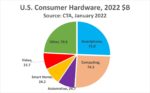
CES (formerly the Consumer Electronics Show) returned to Las Vegas, Nevada last week. In 2021, CES was remote due to the COVID-19 pandemic. On April 28, 2021, the Consumer Technology Association (CTA), the sponsor of CES, announced CES 2022 would be held in Las Vegas. On the date of the announcement new COVID cases in the U.S. were… Read More













The silent killer of analog reliability: Why SPICE misses floating net