




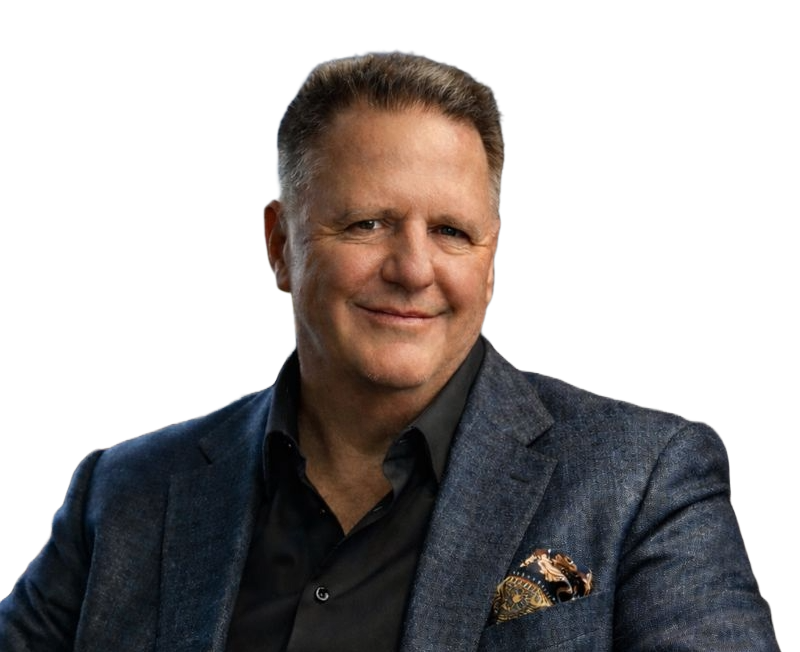


Geoffrey Rodgers spent most of his career at the intersection of semiconductor technology and go-to-market execution, with a focus on scaling businesses and bringing complex solutions to market. He previously led the Analog Go-To-Market motion at Synopsys following the acquisition of Analog Design Automation and held leadership roles at PDF Solutions.
In addition to his semiconductor background, Geoff spent time in enterprise B2B SaaS, where he developed a strong foundation in modern go-to-market models, including segmentation, pipeline development, and building repeatable growth frameworks.
At Chameleon, he is focused on translating technical innovation into scalable, real-world impact in an industry undergoing a fundamental shift toward more flexible, secure, and adaptive silicon architectures.
Tell us about your company.
Modern silicon is still designed as if the future can be fully predicted at tapeout. In reality, standards, threats, and system requirements continue to evolve long after deployment.
Chameleon Semiconductor is focused on solving that gap. We provide embedded FPGA (eFPGA) via user-defined soft IP that brings post-silicon hardware-based programmability into ASICs and SoCs, allowing customers to modify, extend, and future-proof their designs without a respin.
We believe the industry is moving toward a design-for-change model, where flexibility is architected into the system from the start.
Our fabric is delivered as synthesizable RTL, not a hard macro, enabling customers to define exact requirements for their application while maintaining portability across foundries and process nodes. This provides both technical flexibility and supply chain freedom, while also allowing customers to retain tighter control over their IP and where it is manufactured.
Chameleon was founded by a team with deep experience across semiconductor IP, EDA, and system design.
Co-founder, Ken Mai, is a Professor of Electrical and Computer Engineering at Carnegie Mellon University and a recognized leader in digital system design. He has built a prominent research program focused on high-performance and energy-efficient architectures and maintains deep ties into the aerospace, defense, and intelligence communities.
Additionally, Robert Bielby, a recognized authority in FPGA architecture and programmable logic has joined. He has spent decades advancing reconfigurable computing, contributed to high-performance FPGA architectures, holds numerous patents, and has brought complex programmable fabrics from concept through production deployment.
What problems are you solving?
The semiconductor industry is facing a mismatch between design rigidity and real-world change.
Design cycles are long and expensive, but standards, security threats, and system requirements continue to evolve after deployment. Once silicon is taped out, adapting is costly and often requires a respin.
At the same time, customers are facing increasing pressure around IP security and trusted manufacturing. Protecting critical functionality while maintaining flexibility in where and how chips are built has become a growing concern.
We address three core issues.
First, lack of post-silicon flexibility. We enable customers to modify functionality at speed after deployment, versus more traditional software or microprocessor-based approaches, extending product life while maintaining performance.
Second, the cost of getting it wrong. A respin can cost millions and delay programs by months. Our fabric acts as an architectural safety net against that uncertainty.
Third, system fragmentation. As chiplet-based and heterogeneous architectures scale, integrating mismatched protocols and evolving interfaces becomes more complex. We provide a programmable layer that can adapt at those boundaries.
We are enabling a shift from fixed-function silicon to systems that can evolve over time while maintaining control over critical IP.
What application areas are your strongest?
We focus on markets where change is constant and the cost of inflexibility is high.
Aerospace and defense was our initial focus and remains a core market. These systems have long lifecycles, operate in harsh environments, and must respond to evolving threats. They also require strict control over IP, supply chain integrity, and trusted manufacturing environments. Our approach enables customers to maintain control of sensitive functionality while supporting deployment in trusted or onshore fabrication flows.
Our support for radiation-hardened design approaches, combined with the ability to update functionality in the field, aligns well with these requirements.
At the same time, we are expanding into commercial markets where architectural flexibility is becoming critical. Chiplet-based designs are a prime example. As systems are assembled from heterogeneous die, interoperability challenges increase. Our fabric enables protocol adaptation and long-term flexibility at chiplet interfaces.
Security-driven applications are another major driver, particularly around post-quantum cryptography. As standards evolve, maintaining compliance requires hardware-based programmability to support changes without sacrificing performance.
We are also seeing interest in AI-related applications, where rapidly evolving neural network architectures can outpace fixed-function silicon approaches.
Any system where the future cannot be fully predicted at design time, or where control of IP and manufacturing is critical, is a strong fit for our technology.
What keeps your customers up at night?
The common theme is uncertainty.
Customers are being asked to make long-term design decisions in an environment that is changing rapidly. They worry about locking into standards, security algorithms, and architectures that may not hold.
At the same time, supply chain, IP security, and geopolitical concerns are increasing pressure around foundry choice and IP sourcing.
The cost of being wrong is rising, while predictability is declining.
We give customers a way to manage that uncertainty by building flexibility and control directly into their silicon.
We also enable them to respond to new market opportunities that may emerge after tapeout or deployment.
What does the competitive landscape look like and how do you differentiate?
There are several established players in the eFPGA space, each providing variations on embedded programmable fabric.
Our view is that the competitive dynamic is less about the fabric itself and more about how customers address change over the life of a system.
The fabric must meet the power, performance, and area requirements of modern SoCs. That is table stakes.
Traditional approaches, particularly hard macro implementations, are optimized for integration efficiency at design time but remain fixed once deployed. As system requirements evolve, that rigidity becomes a limitation.
We take a different approach. Our soft IP architecture is designed around portability and adaptability, allowing customers to deploy across multiple foundries and process nodes while retaining the ability to update functionality over time. This is increasingly important in a world where both requirements and supply chains are in flux.
We are also the only US-based provider of soft embedded FPGA IP, which is highly relevant in security-sensitive domains such as aerospace, defense, and cryptography. In these environments, control over IP, provenance, and access to trusted manufacturing flows are critical considerations.
Beyond the fabric itself, we focus on system-level challenges such as chiplet interoperability, cryptographic agility, and long lifecycle adaptability.
Our view is that the value lies in enabling customers to build systems that can evolve without sacrificing performance, security, or control.
Our tool flow is based on open-source technologies, which helps avoid the long-term risks associated with proprietary tool lock-in.
What new features or technology are you working on?
Our roadmap is focused on making embedded programmability more practical and impactful at the system level.
We are advancing integration with emerging chiplet standards to enable seamless protocol adaptation across heterogeneous die.
We are also investing in tooling and flows that simplify deployment and make it easier for customers to update functionality over time.
On the security side, we are expanding support for cryptographic agility, with a focus on enabling migration to post-quantum algorithms without requiring new silicon.
We continue to improve performance and density to broaden the range of applications where embedded programmability is viable.
How do customers normally engage with your company?
Engagement typically starts when customers recognize a gap between what they can confidently design today and what they may need to support over the life of the product.
In many cases, this is driven by uncertainty around evolving standards, security requirements, or system architectures. We help them reframe the problem from committing to a fixed design to architecting for change.
From there, we work closely with system and SoC teams to identify where programmability provides the most leverage, often at control points, interfaces, or security functions.
We provide evaluation IP and support integration using standard RTL-based methodologies, with a focus on minimizing disruption to existing design flows while enabling long-term flexibility.
As programs progress, we support optimization, deployment, and ongoing updates, particularly in areas such as cryptographic agility and protocol adaptation.
Over time, the relationship tends to expand. Once customers adopt a design-for-change mindset, they begin to apply it more broadly across their portfolio.
Contact Chameleon Semiconductor
Also Read:
CEO Interview with Xianxin Guo of Lumai
CEO Interview with Johan Wadenholt Vrethem of Voxo
CEO Interview with Dr. Hardik Kabaria of Vinci
Share this post via:



The silent killer of analog reliability: Why SPICE misses floating net