You are currently viewing SemiWiki as a guest which gives you limited access to the site. To view blog comments and experience other SemiWiki features you must be a registered member. Registration is fast, simple, and absolutely free so please,
join our community today!
WP_Term Object
(
    [term_id] => 178
    [name] => IP
    [slug] => ip
    [term_group] => 0
    [term_taxonomy_id] => 178
    [taxonomy] => category
    [description] => Semiconductor Intellectual Property
    [parent] => 0
    [count] => 2088
    [filter] => raw
    [cat_ID] => 178
    [category_count] => 2088
    [category_description] => Semiconductor Intellectual Property
    [cat_name] => IP
    [category_nicename] => ip
    [category_parent] => 0
    [is_post] =>
)
Tell me about Eta Compute’s vision?
We envision a world where intelligent devices at the network edge make everyones’ lives safer, healthier, more comfortable, and convenient without sacrificing privacy and security.
How do you hope to achieve this?
We achieve this by providing the lowest power and most energy efficient machine… Read More
Many of the most compelling applications for Artificial Intelligence (AI) and Machine Learning (ML) are found on mobile devices and when looking at the market size in that arena, it is clear that this is an attractive segment. Because of this, we can expect to see many consumer devices having low power requirements at the edge with… Read More
Tortuga Logic is hosting a webinar on Tuesday, August 18th from 12 to 1PM PDT, in which Xilinx will present their experiences in using the Tortuga Logic Radix-S and Radix-M products for security verification of root of trust in their advanced SoC FPGAs. REGISTER HERE to attend the webinar.
SECURITY CHALLENGES
In general security… Read More
What do you do next when you’ve already introduced an all-in-one extreme edge device, supporting AI and capable of running at ultra-low power, even harvested power? You add a software flow to support solution development and connectivity to the major clouds. For Eta Compute, their TENSAI flow.
The vision of a trillion IoT… Read More
Every chip needs ESD protection, especially RF, analog and nm designs. Because each type of design has specific needs relating to IOs, pad rings, operating voltage, process, etc. it is important that the ESD protection network is carefully tailored to the design. Also because of interactions between the design and its ESD protection… Read More
I’m going to get to low power and RISC-V, but first I’m trying out virtual DAC this year. Seems to be working smoothly, aside from some glitches in registration. But maybe that’s just me – I switched email addresses in the middle of the process. Some sessions are live, many pre-recorded, not quite the same interactive experience… Read More
High-speed communication is a critical component for many applications, most notably in the data center. The serializer/deserializer physical interface, or SerDes PHY is the backbone of many different forms of high-speed communication for this application. Use cases include on chip, between chips, between boards and racks… Read More
Semiconductor IP is one of the most talked about topics on SemiWiki. Always has been, always will be. Synopsys is also one of the most talked about topics on SemiWiki and IP is a very big part of that, absolutely.
After reading Eric Esteve’s latest IP Report I Googled around and found some interesting things. First, I found a Brief History… Read More
For those who design advanced and complex SoCs, the term “off-the-shelf IP” can be elusive. While this approach works for a wide range of IP titles, the pressure for maximum performance or minimum power can lead to custom-tailoring requirements for the IP.
PLDA has seen these requirements for the class of complex, high-performance… Read More
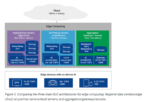
Many of us are now somewhat fluent in IoT-speak, though at times I have to wonder if I’m really up on the latest terminology. Between edge and extreme edge, fog and cloud, not to mention emerging hierarchies in radio access networks – how this all plays out is going to be an interesting game to watch. Ron Lowman, DesignWare IP Product… Read More













Hyper-NA EUV: The Next Frontier in Chipmaking Could Arrive in 2036