You are currently viewing SemiWiki as a guest which gives you limited access to the site. To view blog comments and experience other SemiWiki features you must be a registered member. Registration is fast, simple, and absolutely free so please,
join our community today!
WP_Term Object
(
    [term_id] => 157
    [name] => EDA
    [slug] => eda
    [term_group] => 0
    [term_taxonomy_id] => 157
    [taxonomy] => category
    [description] => Electronic Design Automation
    [parent] => 0
    [count] => 4613
    [filter] => raw
    [cat_ID] => 157
    [category_count] => 4613
    [category_description] => Electronic Design Automation
    [cat_name] => EDA
    [category_nicename] => eda
    [category_parent] => 0
    [is_post] =>
)
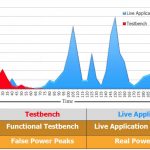
On your last SoC project how well did your dynamic power estimates match up with silicon results, especially while running real applications on your electronic product? If your answer was, “Well, not too good”, then keep reading this blog. A classical approach to dynamic power analysis is to run your functional testbench… Read More
In Chaucer’s Canterbury Tales, the second of the tales told by the pilgrims is The Miller’s Tale. Since this is a family blog, I’ll leave you to research the tale yourself. But FinFETs hide another Miller’s Tale, due to Miller capacitance, sometimes called the Miller effect. This is significant since in FinFET designs Miller capacitance… Read More
Synopsys had their earnings announcement and call last week. They were good. In Aart’s own words:I’m happy to report that our second quarter results were very strong and solidify our outlook for the full year. We delivered revenue of $557 million, non-GAAP earnings per share of $0.68 and $155 million in operation cash flow.… Read More
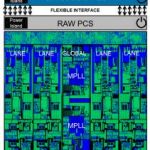
It’s very common these days to hear about a billion gates SoC, but not without a huge design and verification effort and investment of resources. A complete verification of such an SoC needs several verification steps including software and hardware based methodologies that often are not sufficient to cover the whole SoC. In order… Read More
One task that is not very exciting but is critical is that of library quality assurance. Many design groups have created their own procedures, often having been burned in the past, to ensure that the libraries that they use are good. Failure to do so has resulted in:… Read More
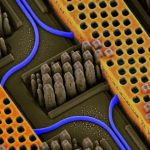
Silicon Photonics is the hottest prospect for blazing fast communication between chips in servers, data centers, and supercomputers.
By using light instead of electrical signals, it promise to usher in a new standard of high performance, low power devices while extending the use of more mature process nodes, helping to reduce… Read More
Leadcore Technology Co. Ltd, a subsidiary of Datang Group, is a silicon success story from China. It recently made waves by snatching the baseband socket from Qualcomm in Xiaomi’s sub-$100 LTE smartphone Redmi 2A. Leadcore’s L1860C chipset included quad-core 1.5GHz CPU and Mali-T628MP2 GPU from ARM and LTE modem… Read More
Design Rule Check (DRC) is the #1 foundry sign-off check. Fabless companies receive the DRC deck from the foundry; it’s a file comprising thousands of commands in a proprietary checker language for a specific DRC tool. In advanced technologies such a deck executes tens of thousands of geometric operations on the physical… Read More
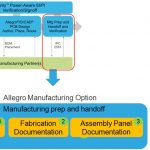
In modern electronic industry PCBs are required to accommodate highly dense circuits with large number of components and complex routing spaces. While the complexity is increasing, the time-to-market is decreasing. In such a scenario, there is no other option than to reduce the design time by employing innovative editing options… Read More
By offering low-power PCI Express PHY solution for mobile application! To make it clear, we are not talking about Mobile Express (M-PCIe), but clearly about PCI Express protocol, including a PCIe Controller and a PCIe PHY. Initially developed to support internal connection between the CPU and the GPU in a PC, the technology has… Read More










The silent killer of analog reliability: Why SPICE misses floating net