You are currently viewing SemiWiki as a guest which gives you limited access to the site. To view blog comments and experience other SemiWiki features you must be a registered member. Registration is fast, simple, and absolutely free so please,
join our community today!
WP_Term Object
(
    [term_id] => 157
    [name] => EDA
    [slug] => eda
    [term_group] => 0
    [term_taxonomy_id] => 157
    [taxonomy] => category
    [description] => Electronic Design Automation
    [parent] => 0
    [count] => 4440
    [filter] => raw
    [cat_ID] => 157
    [category_count] => 4440
    [category_description] => Electronic Design Automation
    [cat_name] => EDA
    [category_nicename] => eda
    [category_parent] => 0
    [is_post] =>
)
Andreas Kuehlmann is the general manager of what is officially now known as the Software Integrity Group of Synopsys, what you might think of as Coverity although they have made some acquisitions too, so they now have a broader technology base. I sat down to talk to him last week.
He was brought up in Germany and came to the US in 1991 … Read More
It’s been the case most of the time that until we hit a bottleneck situation, we do not realize that our focus is not at the right spot. Similar is the case with power analysis at the SoC level. Power has become equally if not more important than the functionality and other parameters of an SoC, and therefore has to be verified earlier … Read More
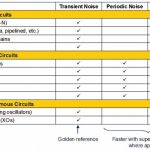
AMS IC designers have a lot to think about when crafting transistor-level designs to meet specifications and schedules, so the most-used tool in their kit is the trusted SPICE or FastSPICE circuit simulator to help analyze timing, power, sensitivity and even device noise. I just did a Google search for “device noise analysis… Read More
Everyone has heard the expression, “Half the job is having the right tool.” In the case of FPGA-based prototyping, however, the right tool for the job is only the beginning. What teams really need to think through is what exactly should be done with an FPGA-based prototyping tool?
The obvious answer is prototyping an SoC, pre-silicon.… Read More
There is obviously a broad spectrum of semiconductor IP but broadly speaking it seems to fall into three buckets:
- foundation IP: standard cells, memories
- microprocessors and associated peripherals
- interface IP
Foundation IP is where it all started. When I was at Compass Design Automation in the 1990s that was pretty much what… Read More
SoC design these days is largely about assembling externally developed semiconductor IP with a small amount of differentiated content. Only companies who have to adopt new processes instantly develop a lot of their own IP. It makes more sense to license it. Partially because there is not a lot of differentiation in standards-based… Read More
Most engineers learn by doing, and so at DAC in June an EDA vendor with High Level Synthesis (HLS) tools held a language tutorial on choosing C++ or SystemC for design and verification projects. The EDA company is Calypto, and Stuart Clubb put together the tutorial on using synthesizable C++ or SystemC. The design and verification… Read More
Antun Domic is the GM of the Design Group at Synopsys. I sat down with him a couple of weeks ago.
His name is Croatian although, of course, there was no Croatia back then it was part of Yugoslavia. But in fact he grew up in Chile and went to university there where he studied EE and math. He came to the US as a grad student and did a PhD at MIT in … Read More
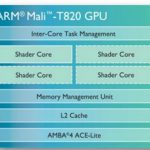
ARM is a well-known semiconductor IP provider and they often create a reference design so that SoC companies can have a starting point to work with. On the GPU side of IP the ARM engineers have an architecture called Mali, and a recent webinar hosted by Synopsys reviewed how the physical design area was minimized by using a combination… Read More
Last month in DAC I could see some of the top innovations in the EDA world. EDA is a key enabler for advances in semiconductor designs. Among a number of innovations worth mentioning (about which I blogged just after DAC), the integration of Mentor’s Veloce with ANSYS’ PowerArtist for power analysis of live applications caught my… Read More









Silicon Insurance: Why eFPGA is Cheaper Than a Respin — and Why It Matters in the Intel 18A Era