You are currently viewing SemiWiki as a guest which gives you limited access to the site. To view blog comments and experience other SemiWiki features you must be a registered member. Registration is fast, simple, and absolutely free so please,
join our community today!
WP_Term Object
(
    [term_id] => 157
    [name] => EDA
    [slug] => eda
    [term_group] => 0
    [term_taxonomy_id] => 157
    [taxonomy] => category
    [description] => Electronic Design Automation
    [parent] => 0
    [count] => 4608
    [filter] => raw
    [cat_ID] => 157
    [category_count] => 4608
    [category_description] => Electronic Design Automation
    [cat_name] => EDA
    [category_nicename] => eda
    [category_parent] => 0
    [is_post] =>
)
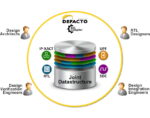
As SoC design flows grow increasingly complex, IP-XACT has become a cornerstone standard throughout the entire development lifecycle: from architecture specification to design assembly and verification. Its growing adoption is reflected in the standard’s continuous evolution, from the 2009 release through 2014… Read More
The semiconductor industry is entering a new era in which advanced packaging and chiplets-based architectures are becoming the primary drivers of system-level innovation. As traditional process-node scaling becomes increasingly complex and expensive, manufacturers are turning to heterogeneous integration, combining… Read More
Synopsys has announced the availability of the first wave of its Multiphysics Fusion Solutions, extending its vision of a unified engineering environment that connects EDA, semiconductor physics, system simulation, and artificial intelligence-driven optimization. The announcement addresses one of the most significant… Read More
Back in the late 1990s, Sente launched a product called WattWatcher to estimate power from design RTL and simulation activity. This was revolutionary for its time since alternatives, while very accurate, only offered power analysis at the gate level. Gate-level analysis is great for fine-tuning power but is unhelpful for achieving… Read More
As semiconductor manufacturing pushes toward advanced nodes with tighter feature sizes, the optical proximity correction (OPC) workflow is adopting curvilinear masks to achieve the larger process windows that traditional Manhattan geometries cannot deliver.
Traditional Manhattan masks constrain shapes to vertical … Read More
Highlights from a recent panel session moderated by Ed Sperling (Semiconductor Engineering) featuring Walden Rhines (Silvaco), Vincent Wong (Verific), Dave Kelf (Breker Verification Systems), Shelly Henry (MooresLab AI), Ann Wu (Silimate), and Cindy Cui (ChipAgents). The panel session was hosted by Electronic System … Read More
Arteris is one of the most impressive companies SemiWiki has worked with over the last fifteen years. We have collaborated on one hundred and seventy-three articles/podcasts that have garnered more than two million views/listens. The success of Arteris can be easily tracked to the executive team and Kurt Shuler was the executive… Read More
Embedded systems programs rarely fail because of a lack of execution capability. They fail because critical engineering documentation drifts out of alignment over time and distance. Simply put, the team is correctly following the wrong instructions. This includes requirements, architecture, implementation, verification,… Read More
The most common question that I get each year at DAC is, “So, what’s new?” When I reviewed the exhibitor list I was pleasantly surprised to see how many EDA, IP and AI companies were attending that I didn’t know about. Here’s just a quick preview of what to expect in Long Beach from July 27-29. I’ll… Read More
As Photonic Integrated Circuits (PIC) continue to gain momentum across datacom, telecom, AI infrastructure, sensing, and quantum computing applications, the need for advanced manufacturing analytics has become increasingly critical. To address the challenges associated with scaling PIC production while maintaining… Read More














Intel Foundry: AI performance now depends on the whole system