You are currently viewing SemiWiki as a guest which gives you limited access to the site. To view blog comments and experience other SemiWiki features you must be a registered member. Registration is fast, simple, and absolutely free so please,
join our community today!
What products are Menta offering today?
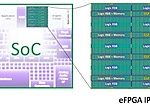
Menta is a semiconductor IP provider. We are the only proven European provider of programmable logic to be embedded inside customers’ SoCs and ASICs. This programmable logic is in the form of embedded FPGA IP. So, we offer our customers the possibility to have a small portion of their SoC as… Read More
Alchip was founded in 2003 by a group of Silicon Valley veterans that followed a similar path of working for semiconductor companies then moving to the EDA/IP/ASIC ecosystem. In fact, I used to play basketball with the Alchip co-founder/chairman during that time and can tell you he is a fierce competitor. Good thing too because … Read More
Achronix came to SemiWiki in 2017 and we added a chapter on the history of Achronix in our update version of “Fabless: The Transformation of the Semiconductor Industry”. So yes we know quite a bit about Achronix and the FPGA business so it was a pleasure to do a CEO Q&A with Robert Blake. First lets take a look at his … Read More
Managing the ASIC manufacturing is one of the biggest challenges of chip projects.
Building an ASIC supply chain requires specific expertise. Throughout the process you’ll be confronted with hundreds of decisions that will require specific knowledge in order to be addressed correctly, avoid costly mistakes and lose time. … Read More
As the traditional ASIC business disappears before our eyes with the recent divestitures and acquisitions, I have been asking questions amongst the fabless semiconductor ecosystem and am getting few answers.
Who or what is going to step in to enable start-ups and new to silicon systems companies with application specific chips?… Read More
We covered the ASIC business in Chapter 2 of our book “Fabless: The Transformation of the Semiconductor Industry” using VLSI Technology and eSilicon as shining examples. Neither of which now exist. The ASIC business model was a critical steppingstone in the transformation of the semiconductor industry. Many systems companies… Read More
Minimizing ASIC production costs is the goal of every company. The problem is that this requires extensive knowledge. You must understand the technical intricacies and the financial implications of multiple activities like wafer production, packaging and QA activities such as electrical tests.
Generally, the more your company… Read More
eFPGA stands for embedded Field Programmable Grid Arrays. An eFPGA is a programmable device like an FPGA but rather than being sold as a completed chip it is licensed as a semiconductor IP block. ASIC designers can license this IP and embed it into their own chips adding the flexibility of programmability at an incremental cost.… Read More
Semiconductor chip package technologies have evolved throughout the years to the point where hundreds of package types are available today.
Most applications will require the more general, single-element packaging for integrated circuits and the other components such as resistors, capacitators, antenna etc. However,… Read More
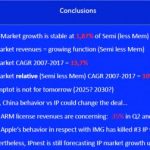
The Design IP market is doing well, growing at higher CAGR that the semiconductor market it is serving, in fact 10% higher for 2007-2017! You may wonder why this IP market is so business friendly? I will try to answer and propose the top 3 reasons explaining this behavior. To name it: IP business is recurrent, external IP sourcing is… Read More