You are currently viewing SemiWiki as a guest which gives you limited access to the site. To view blog comments and experience other SemiWiki features you must be a registered member. Registration is fast, simple, and absolutely free so please,
join our community today!
            WP_Term Object
(
    [term_id] => 159
    [name] => Siemens EDA
    [slug] => siemens-eda
    [term_group] => 0
    [term_taxonomy_id] => 159
    [taxonomy] => category
    [description] =>
    [parent] => 157
    [count] => 853
    [filter] => raw
    [cat_ID] => 159
    [category_count] => 853
    [category_description] =>
    [cat_name] => Siemens EDA
    [category_nicename] => siemens-eda
    [category_parent] => 157
    [is_post] =>
)

WP_Term Object
(
    [term_id] => 159
    [name] => Siemens EDA
    [slug] => siemens-eda
    [term_group] => 0
    [term_taxonomy_id] => 159
    [taxonomy] => category
    [description] =>
    [parent] => 157
    [count] => 853
    [filter] => raw
    [cat_ID] => 159
    [category_count] => 853
    [category_description] =>
    [cat_name] => Siemens EDA
    [category_nicename] => siemens-eda
    [category_parent] => 157
    [is_post] =>
)
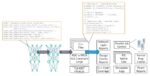
AI and ML techniques are popular topics, yet there are considerable challenges to those that want to design and build an AI accelerator for inferencing, as you need a team that understands how to model a neural network in a language like Python, turn that model into RTL, then verify that your RTL matches Python. Researchers from CERN,… Read More
Most of us are familiar with the metastability problems that can be caused by clock domain crossings (CDC). Early static analysis techniques can flag these kinds of issues to ensure there are no surprises later. I spent quite a bit of time at Atrenta, the SpyGlass company, so I am very familiar with these challenges. Due to the demands… Read More
2.5D and 3D ICs present special challenges since these designs contain multiple chiplets of different materials integrated in all three dimensions. This complexity demands full assembly verification of the entire stack, considering all the subtle electrical and physical interactions of the complete system. Identifying… Read More
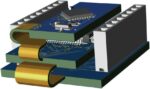
From Zion Research I learned that the flexible electronics market was about $13.2B in 2021 and growing at a CAGR of 21%, so that was impressive. There are several factors that make rigid-flex circuit so attractive, like: space efficiency, reduced weight, enhanced reliability, improved signal integrity, streamlined assembly,… Read More
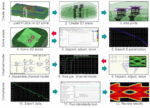
PCB designers can perform pre-route simulations, follow layout and routing rules, hope for the best from their prototype fab, and yet design errors cause respins which delays the project schedule. Just because post-route analysis is time consuming doesn’t mean that it should be avoided. Serial links are found in many PCB designs,… Read More
In today’s rapidly advancing technological landscape, semiconductors are at the heart of innovation across diverse industries such as automotive, healthcare, telecommunications, and consumer electronics. As a leader in technology and engineering, Siemens plays a pivotal role in empowering the next generation … Read More
The concept of shift left is getting to be quite well-known. The strategy involves integrating various checks typically performed later in the design process into earlier stages. The main benefit is to catch and correct defects or errors at an earlier stage when it’s easier and faster to address. For complex SoC design, … Read More
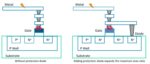
IC layouts go through extensive design rule checking to ensure correctness, before being accepted for fabrication at a foundry or IDM. There’s something called the antenna effect that happens during chip manufacturing where plasma-induced damage (PID) can lower the reliability of MOSFET devices. Layout designers run Design… Read More
Many years ago, I remember discussions around islands of automation/silos. Within the scope of any given silo there is plenty of automation to handle tasks relevant to that phase. But managing the full lifecycle from concept through manufacturing to field support must cross between silos, and those transitions are not as clean… Read More
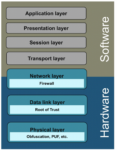
With the advent of IoT devices, vehicles have become increasingly interconnected, offering enhanced automation, connectivity, electrification, and shared mobility. However, this progress also brings forth unprecedented challenges, particularly in ensuring the safety and security of automotive electronics. The complexity… Read More