You are currently viewing SemiWiki as a guest which gives you limited access to the site. To view blog comments and experience other SemiWiki features you must be a registered member. Registration is fast, simple, and absolutely free so please,
join our community today!
WP_Term Object
(
    [term_id] => 157
    [name] => EDA
    [slug] => eda
    [term_group] => 0
    [term_taxonomy_id] => 157
    [taxonomy] => category
    [description] => Electronic Design Automation
    [parent] => 0
    [count] => 4610
    [filter] => raw
    [cat_ID] => 157
    [category_count] => 4610
    [category_description] => Electronic Design Automation
    [cat_name] => EDA
    [category_nicename] => eda
    [category_parent] => 0
    [is_post] =>
)
This is a story of contrasts and counter-intuitive results. Perforce recently published a white paper discussing enterprise scalability – what it takes, why it’s important and what can get in the way. The discussion will shake up some long-held notions regarding effective project management. The results can be significant,… Read More
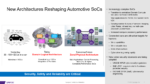
Automotive segment is a market that has historically been supported by a few select suppliers within the semiconductor ecosystem. Over the last decade, this market has transitioned from just being about reliability, performance, fuel efficiency, etc., to placing equal importance to user experience. This user experience … Read More
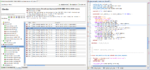
About once a quarter, I touch base with Cristian Amitroaie, CEO and co-founder of AMIQ EDA, to see what’s new with the company, products, and users. Sometimes he surprises me, as he did earlier this year when he mentioned that their tools check about 150 rules for non-standard constructs in SystemVerilog and VHDL. When we talked … Read More
Leveraging neural nets and CR testing isn’t as simple as we first thought. But is that the last word in combining these two techniques? Paul Cunningham (GM, Verification at Cadence), Raúl Camposano (Silicon Catalyst, entrepreneur, former Synopsys CTO) and I continue our series on research ideas. As always, feedback welcome.… Read More
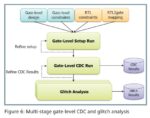
Glitches on clock domain crossing signals have always been a concern for chip designers. Now with increased requirements for reliability, renewed scrutiny is being given to find ways to identify these problems and fix them. In particular applications such as automotive electronics have given this added effort an impetus. Siemens… Read More
Cadence hosted its annual CadenceLIVE Americas conference June 8th-June 9th. Four keynotes and eighty-three different talks on various topics were presented. The talks were delivered by Cadence, its customers and partners.
The C-suite keynotes were delivered by Lip-Bu Tan (CEO) and Dr. Anirudh Devgan (President). The talks… Read More
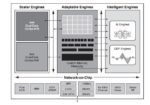
One of the most unique acronyms that I learned about this past year is ACAP from Xilinx, which stands for Adaptive Compute Acceleration Platform. At the recent Cadence LIVE event, I had the pleasure of watching Pei Yao, a Xilinx senior staff CAD engineer, as she talked about the challenges of getting all the analog and mixed-signals… Read More
Last week, Cadence hosted its annual CadenceLIVE Americas conference. Four keynotes and eighty-three different talks on various topics were presented. The talks were delivered by Cadence, its customers and partners.
This blog is about the two keynotes delivered by CEO Lip-Bu Tan and President Dr. Anirudh Devgan. The guest … Read More
This summer, I got the opportunity to work as a Formal Verification Intern with Axiomise for six weeks. I’m a keen designer and love working in design and architecture. Although, I’ve not started my professional career yet, I have done most of my projects as a designer in my undergraduate and postgraduate studies.
Having said that,… Read More
I first remember blogging about EDA in the cloud starting back in 2011, so what’s changed in the last 10 years you may ask? In 2011, it was basically a handful of EDA point tools running batch mode in the cloud, and you were on your own to integrate those into a coherent flow, so expect help from the CAD and IT departments for sure.… Read More











Hyper-NA EUV: The Next Frontier in Chipmaking Could Arrive in 2036