You are currently viewing SemiWiki as a guest which gives you limited access to the site. To view blog comments and experience other SemiWiki features you must be a registered member. Registration is fast, simple, and absolutely free so please,
join our community today!
WP_Term Object
(
    [term_id] => 95
    [name] => Automotive
    [slug] => automotive
    [term_group] => 0
    [term_taxonomy_id] => 95
    [taxonomy] => category
    [description] =>
    [parent] => 0
    [count] => 785
    [filter] => raw
    [cat_ID] => 95
    [category_count] => 785
    [category_description] =>
    [cat_name] => Automotive
    [category_nicename] => automotive
    [category_parent] => 0
    [is_post] =>
)
Ollie Jones, Vice President of Strategic Sales at Sondrel, has worked extensively across Europe, North America and Asia and has held a variety of commercial leadership roles in FTSE 100, private equity owned and start-up companies.
Most recently Ollie was Chief Commercial Officer for an EV battery start up where he led the acquisition… Read More
The great things about CEO keynotes, at least from larger companies, is that you not only learn about recent advances but you also get a sense of the underlying algorithm for growth. Particularly reinforced when followed by discussions with high profile partner CEOs on their directions and areas of common interest. I saw this recently… Read More
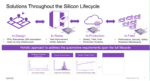
Synopsys recently hosted an information rich-webinar, modestly titled “Improving Quality, FuSa, Reliability, and Security in Automotive Semiconductors”. I think they undersold the event; this was really about managing all of those things through the lifecycle of a car, in line with auto OEMs strategies for the future of the… Read More
On the heels of Arm’s 2024 automotive update, Arteris and Arm announced an update to their partnership. This has been extended to cover the latest AMBA5 protocol for coherent operation (CHI-E) in addition to already supported options such as CHI-B, ACE and others. There are a couple of noteworthy points here. First, Arm’s new Automotive… Read More
The rapid advancement of technology, including generative AI, IoT, and autonomous vehicles, is revolutionizing industries and enhancing efficiency. At the same time, such advances also generate huge amounts of data to be transmitted and processed to make sense and provide value to consumers and society as a whole. In essence,… Read More
If you were at all uncertain about auto OEM development priorities, the answer is becoming clear: to accelerate/shift left automotive software development and debug. At 100M lines of code and accelerating, this task is overshadowing all others. A recent Arm update from Dipti Vachani (SVP and GM for the Automotive Line of Business)… Read More
More automotive content 😀
In modern cars, safety is governed as much by AI-based functions as by traditional logic and software. How can these functions be fault-graded for FMEDA analysis? Paul Cunningham (GM, Verification at Cadence), Raúl Camposano (Silicon Catalyst, entrepreneur, former Synopsys CTO and now Silvaco CTO)… Read More
Non-volatile memory (NVM) is a critical building block for most electronic systems. The most popular NVM technology has traditionally been flash. As a discrete part, the technology can be delivered in various form factors. For embedded applications flash presents scaling challenges, however. A new NVM technology developed… Read More
Next significant automotive blog in a string I will be posting (see here for the previous blog).
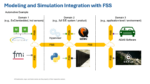
In the semiconductor world, mixed simulation means mixing logic sim, circuit sim, virtual sim (for software running on the hardware we are designing) along with emulation and FPGA prototyping. While that span may seem all-encompassing,… Read More
Keynotes commonly provide a one-sided perspective of a domain, either customer-centric or supplier-centric. Kudos therefore to Cadence’s Paul Cunningham for breaking the mold in offering the first half of his keynote to Anthony Hill, a TI fellow, to talk about outstanding challenges he sees in verification for automotive … Read More










The $725 Million Chip Development: Why Execution Risk, Not IP Cost, Now Dictates Advanced-Node Survival