You are currently viewing SemiWiki as a guest which gives you limited access to the site. To view blog comments and experience other SemiWiki features you must be a registered member. Registration is fast, simple, and absolutely free so please,
join our community today!
As you may know, Silvaco has done some very clever acquisitions to fuel their unprecedented growth over the last five years. We have a wiki that tracks EDA Mergers and Acquisitions, Silvaco included, and it is the most viewed wiki on SemiWiki.com with 102,005 views thus far.
Silvaco acquired Nangate in March of 2018. NanGate got … Read More
One of the key growth areas for the semiconductor ecosystem is IP which of course includes IP related EDA software. In May of 2017 design management/collaboration expert (one of my personal favorite EDA companies) ClioSoft announced designHUB[SUP]®[/SUP] for IP management and re-use. Using designHUB, semiconductor companies… Read More
EDA is big on growth through acquisition, being acquired many times throughout my career I know this by experience. In fact, we have a wiki that tracks EDA Mergers and Acquisitions and it is the most viewed wiki on SemiWiki.com with 101,918 views thus far.
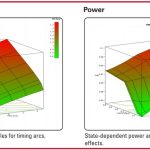
In March of 2017 ANSYS acquired CLK Design Automation which did timing variation… Read More
A recent press release from eSilicon caught my eye. The company has been touting their 7nm SerDes quite a bit lately – reach, power, flexibility, things like that. While those capabilities are important, any high-performance chip needs to work in the context of the system, which usually contains technology from multiple sources.… Read More
The GLOBALFOUNDRIES story has been one of the more interesting ones inside the fabless semiconductor ecosystem. It started in 2008 when AMD announced a partnership with ATIC of Abu Dhabi to create a new joint venture company to become the world’s first truly global semiconductor foundry. On March 4[SUP]th[/SUP] of 2009 (happy… Read More
IP vendors have always had the inside track on the status of new process nodes and what customers are planning for their next designs. This is even more apparent now that systems companies are successfully doing their own chips by leveraging the massive amounts of commercial IP available today. Proving once again that IP really … Read More
Bob Smith is executive director of the ESD (for electronic system design) Alliance that many Semiwiki readers will remember as the EDA Consortium. As Bob explains, the semiconductor industry is changing and evolving, and the electronic system design ecosystem with it. I encourage you to take a break from what you’re doing and … Read More
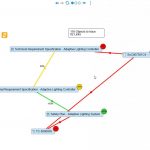
When delivering devices to markets that require heavily audited compliance it is necessary to document and demonstrate development processes that follow the various standard(s) such as IEC65108, IATF16949, ISO26262.
For complex multi-disciplinary designs this can be difficult as they are often developed by multiple teams… Read More
This Month, you can Join us in Austin, Mountain View or Boston
In 2018, we hosted several RISC-V technology symposia in India, China and Israel. These events were very successful in fueling the growing momentum surrounding the RISC-V ISA in these countries. It turns out that these events were just the tip of the iceberg. In 2019, … Read More
Breker Verification Systems solves challenges across the functional verification process for large, complex semiconductors. This includes streamlining UVM-based testbenches for IP verification, synchronizing software and hardware tests for large system-on-chips (SoCs), and simplifying test sets for hardware emulation… Read More


















Intel, Musk, and the Tweet That Launched a 1000 Ships on a Becalmed Sea