




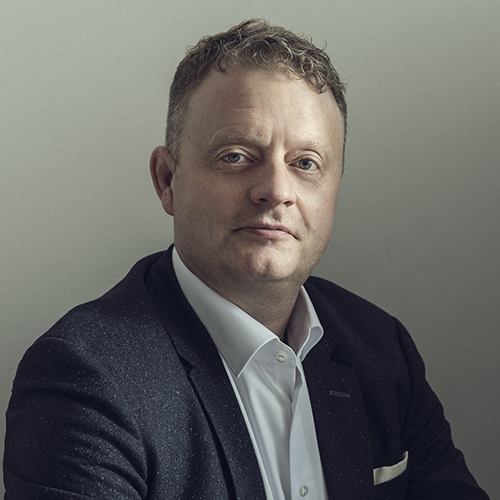



Leon Lauritsen is the CEO of Aras, a leading provider of digital thread solutions for product lifecycle management and engineering AI. He joined the company in 2022 through the acquisition of Minerva PLM, where he had been for over 20 years. While at Minerva, Leon led sales and marketing globally and expanded its geographic coverage throughout Europe and North America. Leon’s experience ranges from launching products in the PLM domain to other enterprise software domains like ERP, CRM, and SCM. His prior experience with different roles and companies includes a broad background, ranging from programming to business consulting, project management, and business development. These experiences and his results-oriented focus have been decisive to Aras’ success.
Tell us about Aras.
The Aras vision is to change the way people work together to make things. We help manufacturers connect the information, decisions, relationships, and processes that drive product development so engineering teams can make better decisions throughout the product lifecycle. Our digital thread platform for product lifecycle management and engineering AI provides the foundation for that connected product context.
Our customers span aerospace and defense, automotive, industrial equipment, high tech, electronics, and semiconductors. What we consistently see is that they don’t have a shortage of engineering tools. The real challenge is connecting the information created across those tools into a trusted product context that engineering teams can use to make better decisions throughout the lifecycle.
That’s where Aras Innovator comes in. It’s built on an open, configurable, model-driven architecture that allows companies to model their own products, processes, and relationships rather than forcing their business into a predefined structure. We think that’s particularly important because no company can predict exactly how its products, processes, or business will change over the next decade. Your PLM platform needs to be ready to adapt alongside the business.
What problems are you solving?
The biggest challenge we see is that product complexity has outgrown the fragmented systems companies use to manage it.
In semiconductor and high-tech environments, critical engineering information is created across many different tools and organizations, from reusable IP and design data to manufacturing, suppliers, quality, and compliance. Each system plays an important role but connecting that information into a trusted view of the product remains a challenge.
Companies need to understand how all of those relationships fit together. They need to know which IP is approved for reuse, what products depend on it, whether a program is truly ready for its next milestone, and what the downstream impact will be when something changes.
We don’t try to replace systems like EDA, ERP, MES, or simulation tools. Our role is to connect the data they produce and put it into the context of products, programs, configurations, decisions, and change. That gives organizations the trusted product context they need to make better decisions throughout the lifecycle.
What application areas are your strongest?
Our strength has always been helping customers manage complex, multidisciplinary product lifecycles that continue to evolve over many years.
For semiconductor companies, this includes stage-gate program management, semiconductor IP management, manufacturing process and artifact management, controlled product definition, engineering change, supplier collaboration, compliance, and closed-loop quality.
A good example is reusable IP. Rather than treating it as a collection of files, we help customers govern it as a strategic product asset, with its qualification status, licensing, export controls, approved applications, reuse history, and downstream dependencies all connected. Program readiness can then be based on real engineering evidence instead of manually assembled presentations.
We’re also seeing growing demand to connect semiconductor information to the broader system context. Chips do not exist in isolation. They become part of packages, boards, vehicles, industrial equipment, and increasingly software-defined products. We help customers connect and govern the digital thread from silicon and IP through PCBA and system-level product structures, including the changes and dependencies between them.
What keeps your customers up at night?
Our customers are under constant pressure to innovate faster while the cost of making the wrong decision continues to increase.
Products are more sophisticated, supply chains are more dynamic, regulatory expectations continue to grow, and organizations are looking for practical ways to bring AI into engineering. That means even small decisions can have far-reaching consequences across programs, products, and the broader business.
AI creates both excitement and important questions. The opportunity is clear, but engineering AI requires more than access to data. It needs to understand the context around that data: how a product is configured, what has changed, where it is in the lifecycle, and the decisions that have shaped it. Without that context, AI can generate answers, but not necessarily the right ones.
That’s why we believe the digital thread is becoming even more important. AI doesn’t replace the need for trusted engineering data, it depends on it. Connected lifecycle information gives organizations the product context they need for AI to contribute meaningful engineering value rather than simply automating isolated tasks.
What does the competitive landscape look like, and how does Aras differentiate?
The market includes large enterprise suites, specialized engineering applications, point solutions, and internally developed systems. Many of them do exactly what they were designed to do. The challenge begins when companies need to connect information across those domains while continuing to evolve their own business processes.
Every company is different, and no company stands still. Products become more complex, organizations evolve, acquisitions happen, regulations change, and now AI is changing how engineering work gets done. We believe a PLM platform has to provide the governance organizations need today while remaining flexible enough to adapt to whatever comes next.
That’s where Aras has always been different. Our open, configurable architecture allows customers to extend their data model, applications, workflows, and user experiences without creating a separate architecture that becomes increasingly difficult to upgrade.
This matters because semiconductor and high-tech companies cannot predict every process, technology, acquisition, product structure, or AI use case they will need over the next decade. Their PLM platform must be structured enough to provide control but flexible enough to evolve with the business.
We also view PLM as a connective platform rather than a closed application boundary. Customers can begin with a specific problem, deliver value incrementally, and expand the digital thread over time.
What new technology are you working on?
Two areas are especially important to us:
The first is our semiconductor industry accelerators, which bring together configurable templates for stage-gate program management, IP management, manufacturing readiness, product definition, change, suppliers, compliance, and quality. They reflect what we’ve learned from working closely with customers and provide semiconductor companies with practical starting points while maintaining a single governed chip-to-system digital thread.
The second is InnovatorEdge. It provides services for API management, task-specific application development, and agentic AI. This allows product data and processes to be made available securely to applications and AI agents, with the appropriate permissions, lifecycle context, and traceability. Rather than placing an AI assistant beside PLM, we are creating a governed environment in which agents can participate in product lifecycle workflows.
How do customers normally engage with Aras?
Most customers don’t come to us looking for another software deployment. They come to us because they’re trying to solve a high-value business problem. We work together to identify the governance gaps, map the relevant digital thread, and focus on an initial use case that can produce measurable value.
That might be semiconductor IP governance, program gate readiness, engineering change, supplier collaboration, quality, or product configuration. Customers can use Aras services, qualified implementation partners, or their own teams. They then expand incrementally as priorities evolve.
Our goal is to build a long-term partnership. We start where the business need is greatest, demonstrate value, and extend the digital thread as priorities evolve.
Also Read:
CEO Interview with Jerry Chen of Upbeat Technology
CEO Interview with Brendan Emery of iQ Sense
CEO Interview with David Reeder from Entegris
Share this post via:


Terafab’s Single Roof: Why Packaging, Not Lithography, Decides High Volume