You are currently viewing SemiWiki as a guest which gives you limited access to the site. To view blog comments and experience other SemiWiki features you must be a registered member. Registration is fast, simple, and absolutely free so please,
join our community today!
WP_Term Object
(
    [term_id] => 19172
    [name] => Chiplet
    [slug] => chiplet
    [term_group] => 0
    [term_taxonomy_id] => 19172
    [taxonomy] => category
    [description] =>
    [parent] => 0
    [count] => 246
    [filter] => raw
    [cat_ID] => 19172
    [category_count] => 246
    [category_description] =>
    [cat_name] => Chiplet
    [category_nicename] => chiplet
    [category_parent] => 0
    [is_post] =>
)
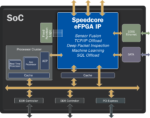
With our continuing chiplet coverage I found this of great interest. I have always felt that eFPGAs and chiplets are a natural fit for the next generation of chip design and this is an excellent example. As we design with chiplets one of the challenges is verification/validation in regards to performance and interoperability. … Read More
According to some AI dreamers, we’re almost there. We’ll no longer need hardware or software design experts—just someone to input basic requirements from which fully realized system technologies will drop out the other end. Expert opinions in the industry are enthusiastic but less hyperbolic. Bob O’Donnell, president, founder… Read More
Chiplet is a hot topic in the semiconductor world these days. So much so that if one hasn’t heard that term, the person must be living on a very isolated islet. Humor aside, products built using chiplets-based methodology have been in existence for at least some years now. Companies such as Intel, AMD, Apple and others have integrated… Read More
Every country realizes the importance of producing skilled chip designers who could decide their success as soldiers by creating advanced AI chips for winning the Chip War. Also, every country is now gearing up to build a good semiconductor manufacturing ecosystem to balance the global semiconductor supply chain that could … Read More
At the recent Synopsys Users Group Meeting (SNUG) I had the honor of leading a panel of experts on the topic of chiplets. One of those panelists was the very personable Dr. Henry Sheng, Group Director of R&D in the EDA Group at Synopsys. Henry currently leads engineering for 3DIC, advanced technology and visualization.
Are we
…
Read More
There were quite a few announcements at the TSMC Technical Symposium last week but the most important, in my opinion, were based on TSMC N3 tape-outs. Not only is N3 the leading 3nm process it is the only one in mass production which is why all of the top tier semiconductor companies are using it. TSMC N3 will be the most successful node… Read More
Anirudh is an engaging speaker with a passion for technology. Acknowledging the sign of the times, he sees significant value-add in AI but reminded us that it is a still supporting actor in system design and other applications where star roles will continue to be played by computational software that’s founded in hard science, … Read More
TSMC covered their specialty technologies in great detail. Specialty is what we inside the ecosystem used to call weird stuff meaning non-mainstream and fairly difficult to do on leading edge processes. Specialty technologies will play an even more important part of semiconductor design with the advent of chiplets where die… Read More
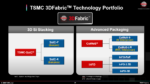
TSMC’s 3DFabric initiative was a big focus at the symposium, as it should be. I remember when TSMC first went public with CoWos the semiconductor ecosystem, including yours truly, let out a collective sigh wondering why TSMC is venturing into the comparatively low margin world of packaging. Now we know why and it is absolutely… Read More
At the recent Synopsys Users Group Meeting (SNUG) I had the honor of leading a panel of experts on the topic of chiplets. The discussion was based on a report published by the MIT Technology Review Insights in cooperation with Synopsys. This is a very comprehensive report (12 pages) that is available online HERE.
Here is the preface… Read More










Hyper-NA EUV: The Next Frontier in Chipmaking Could Arrive in 2036