You are currently viewing SemiWiki as a guest which gives you limited access to the site. To view blog comments and experience other SemiWiki features you must be a registered member. Registration is fast, simple, and absolutely free so please, join our community today!
Over the last decade or so, the automotive industry has been rapidly adopting and deploying innovative and revolutionary technologies in automobiles. One such revolution is the autonomous vehicle technology. While this technology is not fully mature yet, some components of this technology are. Many late model automobiles… Read More
In every chip, power is a progressive problem to be solved. Designers have long had to rely on a combination of experience and knowledge to tackle this dilemma, typically having to wait until after silicon availability to perform power analysis with realistic software workloads. However, this is too late in the game, as it becomes… Read More
The move to true 3D IC, monolithic 3D SOC and 3D heterogeneous integration may require one of the most major design tool architecture overhauls since IC design tools were first developed. While we have been taking steps toward 3DIC with 2.5D designs with interposers, HBM, etc., the fundamental tools and flows remain intact in many… Read More
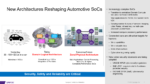
Automotive segment is a market that has historically been supported by a few select suppliers within the semiconductor ecosystem. Over the last decade, this market has transitioned from just being about reliability, performance, fuel efficiency, etc., to placing equal importance to user experience. This user experience … Read More
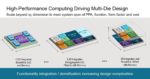
If you ascribe to the notion that things move in circles, or concentrically, the move to die-to-die connectivity makes complete sense. Just as multi-chip modules (MCM) were the right technology decades ago to improve power, areas, performance and cost, the use of chiplets with die-to-die connections provides many advantages… Read More
Thanks to advanced hardware and software, smart vehicles are improving with every generation. Capabilities that once seemed far-off and futuristic—from automatic braking to self-driving at the very pinnacle—are now either standard or within reach. However, considering how vehicle architectures have continued to evolve,… Read More
On July 30, 2020, NASA launched the Mars 2020 Perseverance rover, which is scheduled to land today. Perseverance has been deployed to Mars with a new mission: to search for evidence of past life and collect samples that will eventually be brought back to Earth by future missions.
Mars 2020 Perseverance rendering courtesy of NASA/JPL-Caltech… Read More
Just prior to this year’s Synopsys User Group (SNUG) meeting, I had a call with Hany Elhak, Group Director of Product Management and Marketing at Synopsys, to talk about their latest announcements for analog simulation. Synopsys usually has big things to talk about each year around this time – this year is no exception. Hany… Read More
PCI-SIG has held to doubling PCIe’s data rate with each revision of the specification. The consortium of 800 companies, with its board consisting of Agilent, AMD, Dell, HP, Intel, Synopsys, NVIDIA, and Qualcomm, is continuing this trend with the PCIe 6.0 specification which calls for a transfer rate of 64 GT/s. PCI-SIG released… Read More
We have come a long way from the days of limited and manageable characterization databases with fewer views and smaller library sizes. The technologies we are headed towards pushing characterization to its limits with special modeling for variation, aging and reliability all on a single process, voltage and temperature (PVT).… Read More