You are currently viewing SemiWiki as a guest which gives you limited access to the site. To view blog comments and experience other SemiWiki features you must be a registered member. Registration is fast, simple, and absolutely free so please,
join our community today!
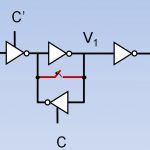
Estimating the MTBF of an SoC should always include an analysis of synchronizer reliability. Contemporary process nodes are introducing new challenges to the reliability of clock domain crossings so it is prudent to revisit how your simulation tool calculates a synchronizer’s MTBF. Let’s list the ten most common pitfalls.… Read More
I remember during my first ten years as a software developer, I used many different computers such as IBM mainframes, Apollo and Sun workstations, and VAX computers. During that time I also bought my first home computer, a Macintosh. I didn’t of course think of this at the time, but the one thing they all had in common was that they did… Read More
After looking at various aspects of this company, to sum up, I couldn’t find any better statement than this; thoughtful management here is actually leadership with passion which achieves tangible results. This reflects in the methodology of doing things in this company which has given it a place among top EDA companies in a span… Read More
There never seems to be enough time in a SoC project to simulate all of the cycles and tests that you want to run, so any technique to accelerate each run is welcomed. You can just wait for your software-based RTL simulator to finish running, or you can consider using a hardware-based accelerator approach. I learned more about one such… Read More
Timing exceptions are ways of guiding design tools, primarily synthesis and static timing analysis (STA), but these days also place & route and perhaps other tools. Most paths in a design go from one register to the next register. Both registers are on the same clock, and the design needs to ensure that the signal can make it from… Read More
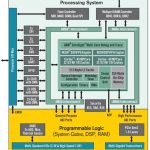
Just as important as block RAMs, IO and DSP48’s is what interconnect or fabric is going to be used when considering SoC FPGA designs. I think Xilinx has found the winning combination. What is paramount to the new SoC FPGA methodologies is not only the challenge of moving huge amounts of data around; we are now to consider data… Read More
At the onset of SoCs with multiple functionalities being packed together at the helm of technologies to improve upon performance and area; power, which was earlier neglected, has become critical and needs special attention in designing SoCs. And there comes reliability considerations as well due to multiple electrical and … Read More
This week, I had a nice opportunity meeting Charu Puri, Corporate Marketing and Sushil Gupta, V.P. & Managing Director at Atrenta, Noida. Well, I know Sushil since 1990s; in fact, he was my manager at one point of time during my job earlier than Cadence. He leads this large R&D development centre, consisting about 200 people… Read More
I never understood when I was a kid how ‘the Blob’ could actually catch someone but it sure did. It caught the unsuspecting, the off guard. I mean you’d have time for a soda and shower if you saw it on your road. And no, your manager is not the Blob; don’t think like that, it’s always his boss. The blob comes to consume the worker who was unaware… Read More
On my first job out of college as an IC design engineer I was surprised to discover that a major cost of chips was in the amount of time spent on the tester before being shipped. That is still true today, so how would you keep your tester time down, test coverage high and with a minimum number of pins when using multiple processors on a single… Read More