You are currently viewing SemiWiki as a guest which gives you limited access to the site. To view blog comments and experience other SemiWiki features you must be a registered member. Registration is fast, simple, and absolutely free so please,
join our community today!
A common SoC design methodology in current use starts with preparation of the physical floorplan — e.g., block/pin placement, global clock domain and bus signal planning, developing the global/local power distribution (and dynamic power domain management techniques). Decoupling capacitor estimated densities and… Read More
If you plan on visiting Solido (the world leader in EDA software for variation-aware design of integrated circuits) at the Design Automation Conference next month for a demonstration of Variation Designer, register online now and get an autographed copy of “Mobile Unleashed”. Such a deal!
Solido Variation Designer is used by… Read More
If you look back at the beginning of the ASIC business you will see that it was really a critical time in the semiconductor industry. It all began in the 1980s which coincidentally is when I started my career in Silicon Valley. General purpose integrated circuits ruled the market, forcing system designers to cobble together off-the-shelf… Read More
DAC is again going to be in Austin (reason enough to go), from June 6[SUP]th[/SUP]-8[SUP]th[/SUP] for the main event. A number of events caught my eye:
- Monday AM – custom hardware for algorithmic trading. If you want to know more about FinTech (technology for finance) this could be for you
- Another Monday morning session on Linux
…
Read More
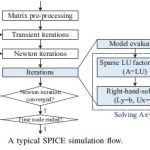
SPICE simulation is the workhorse tool for custom circuit timing validation and electrical analysis. As the complexity of blocks and macros has increased in advanced process nodes — especially with post-layout extraction parasitic elements annotated to the circuit netlist — the model size and simulation throughput… Read More
Mixed-signal design creates all sorts of interesting problems for implementation and verification flows, particularly when it comes to design for low power. We tend to think of mixed-signal as a few blocks like PLLs, ADCs and PHYs on the periphery of the design. Constrain and verify the digital power requirements up to analog … Read More
There’s an old adage, attributed to renowned computer scientist Andrew Tannenbaum, one that perhaps only engineers find amusing: “The nice thing about standards is that you have so many to choose from.” Nevertheless, IEEE standards arise from customer requirements in the electronics industry. Many relate… Read More
As I have mentioned before, semiconductor professionals are very smart people, pound for pound the smartest in the workforce in my opinion. So what happens when thousands of engineers from Qualcomm, Broadcom, Altera, and Intel get shown the door? They don’t go to work for Starbucks, they don’t go to the unemployment line, they … Read More
When you’re designing a hardware solution to plug into what is arguably the most complex system of all – the Internet – you can’t get away with a little fake traffic to test whether your box is going to do all the right things at the right performance. You have to model realistic voice, video, data and wireless traffic in… Read More
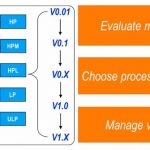
Working at Intel as a circuit designer I clearly remember how there were three distinct groups: Process Development, CAD and Circuit Design. Each of the groups sat in a different part of the building in Aloha Oregon, we had different job titles, different degrees, spoke with different acronyms and yet we all had to work together … Read More