





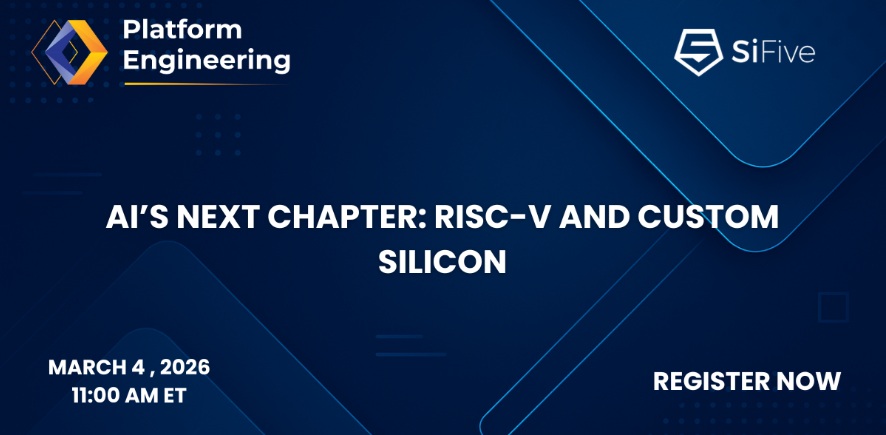
In the rapidly evolving world of artificial intelligence and semiconductor design, open-standard processor architectures are gaining unprecedented traction. At the center of this shift is SiFive, a company founded by the original creators of the RISC-V ISA, which champions an open, extensible, and license-free alternative to proprietary architectures like x86 and Arm. A webinar titled “SiFive AI’s Next Chapter: RISC-V and Custom Silicon” encapsulates the company’s vision for how RISC-V and tailored silicon platforms will power the next wave of AI innovation, from edge devices to large-scale data centers.
The Strategic Importance of RISC-V for AI
At its core, RISC-V is a modular ISA that lets designers choose only the instruction subsets they need, and extend the base set with custom extensions suited to their applications. This openness dramatically reduces barriers to entry and enables highly specialized designs that can be optimized for power, performance, and area, crucial for AI and machine learning workloads. Unlike closed ISAs where licensing fees and fixed capabilities constrain flexibility, RISC-V allows custom silicon to be tailored from the ground up for specific AI use cases, from inference at the edge to large model training in the cloud.
A webinar on this subject would likely begin by framing why open ISAs are now receiving serious attention: as AI workloads grow in size and complexity, traditional CPU designs can become bottlenecks. Custom silicon chips designed with specific AI functions built directly into the silicon can accelerate key operations like matrix multiplication, tensor processing, and low-precision arithmetic. RISC-V’s flexible ISA makes it easier to implement such features efficiently. Moreover, as traditional leaders in processor design (like Arm) face increasing licensing constraints or strategic shifts, an open foundation like RISC-V offers an attractive alternative for companies wanting to future-proof their hardware roadmaps.
Custom Silicon: Tailoring Processors to AI Workloads
The “custom silicon” part of the webinar title refers to the creation of chips specifically architected for particular AI demands. Rather than using generic CPUs and off-the-shelf components, custom silicon can embed accelerators, optimize memory hierarchies, and integrate unique instruction extensions that speed up AI computations at lower energy consumption. In a field where efficiency and performance per watt are critical, these gains matter.
For example, SiFive’s own products, such as its Intelligence and Performance families, integrate vector and matrix computation units into RISC-V CPUs, allowing these cores to act as accelerator control units that manage AI workloads more efficiently than general-purpose processors alone. This approach drastically reduces overhead and can enable better AI performance on devices ranging from autonomous sensors to cloud servers.
Another important theme is ecosystem enablement. A custom silicon strategy only succeeds if a robust toolchain, including compilers, libraries, and runtime support, enables developers to target these designs. SiFive and partners have been building out support for major AI frameworks and compilers so that developers can deploy models efficiently on RISC-V platforms without sacrificing software compatibility or developer productivity.
Industry Collaboration and Co-Design
Webinars on RISC-V often include discussions about ecosystem partnerships and co-design approaches. For instance, recent announcements highlight collaborations between SiFive and companies such as NVIDIA, integrating technologies like NVLink to enable coherent, high-bandwidth CPU-to-accelerator communication, a major innovation for AI data centers where latency and bandwidth can dramatically impact scaling and throughput.
Similarly, the adoption of RISC-V by other ecosystem players, including major cloud providers and AI accelerator developers, underscores a broader industry shift toward heterogeneous computing architectures where CPUs, GPUs, and custom accelerators work in concert. These partnerships demonstrate how open ISAs and custom silicon are no longer niche, they are becoming central to next-generation AI infrastructure design.
Takeaways for Developers and Architects
A webinar like “SiFive AI’s Next Chapter: RISC-V and Custom Silicon” serves multiple audiences: hardware architects seeking insights on cutting-edge silicon design; software developers interested in how AI workloads can be optimized on RISC-V; and industry strategists evaluating open standard architectures against incumbent designs. Key takeaways would include:
- How RISC-V’s modular ISA facilitates tailored processor designs for specific AI models and workloads.
- The advantages of custom silicon in boosting performance and efficiency for AI machine learning functions.
- Case studies or technical deep dives showing how SiFive’s RISC-V IP can be applied across edge, embedded, and data center use cases.
- A look into emerging collaborations and ecosystem developments that broaden the practical applicability of RISC-V.
Bottom Line: This webinar represents not just a technical briefing but a reflection of a broader industry narrative: open, customizable hardware built on RISC-V is steadily transforming the AI computing landscape. As AI models continue to grow in complexity and deployment scenarios diversify, processor architectures that offer flexibility, efficiency, and extensibility, hallmarks of RISC-V and custom silicon , are set to play a foundational role in the future of AI.
Also Read:
SiFive to Power Next-Gen RISC-V AI Data Centers with NVIDIA NVLink Fusion
Tiling Support in SiFive’s AI/ML Software Stack for RISC-V Vector-Matrix Extension
RISC-V Extensions for AI: Enhancing Performance in Machine Learning
Share this post via:



Comments
There are no comments yet.
You must register or log in to view/post comments.