You are currently viewing SemiWiki as a guest which gives you limited access to the site. To view blog comments and experience other SemiWiki features you must be a registered member. Registration is fast, simple, and absolutely free so please,
join our community today!
Byline: Richard Shreiner
Modern semiconductor architectures are pushing the absolute limits of physical scaling. As data rates climb into sub-picosecond regimes across high-performance computing, 5G/6G infrastructure, and advanced AI clusters, physical layer (Layer 1) signal integrity has shifted from an engineering… Read More
TSMC is describing an artificial intelligence boom that reaches beyond accelerator chips into the wider computing infrastructure needed to support increasingly capable AI systems. On the recent investor call, Chairman and CEO Dr. C.C. Wei presents strong demand, persistent supply constraints and an ambitious expansion … Read More
At DAC 2026 I had the opportunity to speak with Juan Rey, CTO Siemens EDA about the Calibre product used for IC physical verification, circuit verification, 3D IC and DFM optimization. Juan has been involved with Calibre since 2001, served on the Board of Directors of Silicon Integration Initiative (SI2), on the Executive Technology… Read More
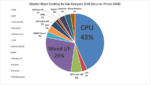
The $9.5 Billion Design IP Market: Shifting Boundaries, Arm’s Monopoly, and the RISC-V Responseby Kalar Rajendiran on 09-04-2026 at 6:00 amCategories: AI, Arm, IP, IPnest, RISC-V, Semiconductor, Semiconductor Intelligence, Semiconductor Services, SiFive, Synopsys
While semiconductor design intellectual property (IP) is a $9.45 billion market, it acts as the absolute architectural bottleneck for the entire global semiconductor value chain. The choices made at the IP layer today dictate the cost, power, and security of a downstream technology economy rapidly marching toward a trillion… Read More
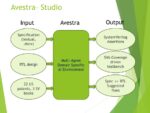
Modern ASIC, SoC, CPU, and GPU development depends on verification processes that detect subtle functional defects before tapeout. SystemVerilog Assertions (SVA) are particularly important because they encode temporal design intent: how signals, states, and transactions must behave across clock cycles. Unlike conventional… Read More
Hot Chips 2026, formally the thirty-eighth Symposium on High Performance Chips, arrives at Stanford’s Memorial Auditorium from August 23 through 25 with a program that captures a decisive shift in computer architecture. Peak arithmetic throughput remains important, but the conference is increasingly about system balance:… Read More
This late summer, Quadric is taking its vision for programmable, on-device AI to three of the industry’s most influential gatherings. From advanced processor design at HotChips to scalable deployment at the AI Infra Summit and physical AI at Embedded World North America, each stop offers a different opportunity to see how the… Read More
The rapid growth of AI applications in edge devices has created a strong demand for specialized hardware capable of performing high-performance neural network inference under strict power and latency constraints. Traditional CPUs and GPUs often struggle to meet the efficiency requirements of embedded and mobile systems.… Read More
In the rapidly evolving world of artificial intelligence and semiconductor design, open-standard processor architectures are gaining unprecedented traction. At the center of this shift is SiFive, a company founded by the original creators of the RISC-V ISA, which champions an open, extensible, and license-free alternative… Read More
The explosive growth of AI and accelerated computing is placing unprecedented demands on system-on-chip (SoC) design. Modern AI workloads require extremely high bandwidth, ultra-low latency, and energy-efficient data movement across increasingly heterogeneous architectures. As SoCs scale to incorporate clusters of… Read More