You are currently viewing SemiWiki as a guest which gives you limited access to the site. To view blog comments and experience other SemiWiki features you must be a registered member. Registration is fast, simple, and absolutely free so please,
join our community today!
            WP_Term Object
(
    [term_id] => 14
    [name] => Synopsys
    [slug] => synopsys
    [term_group] => 0
    [term_taxonomy_id] => 14
    [taxonomy] => category
    [description] =>
    [parent] => 157
    [count] => 807
    [filter] => raw
    [cat_ID] => 14
    [category_count] => 807
    [category_description] =>
    [cat_name] => Synopsys
    [category_nicename] => synopsys
    [category_parent] => 157
    [is_post] =>
)

WP_Term Object
(
    [term_id] => 14
    [name] => Synopsys
    [slug] => synopsys
    [term_group] => 0
    [term_taxonomy_id] => 14
    [taxonomy] => category
    [description] =>
    [parent] => 157
    [count] => 807
    [filter] => raw
    [cat_ID] => 14
    [category_count] => 807
    [category_description] =>
    [cat_name] => Synopsys
    [category_nicename] => synopsys
    [category_parent] => 157
    [is_post] =>
)
NVIDIA’s expansion of the NVIDIA Agent Toolkit with PhysicsNeMo and CUDA-X libraries marks a shift from general-purpose AI assistants toward autonomous engineering systems. Instead of limiting agents to document retrieval, code generation, or workflow automation, the expanded toolkit lets developers connect reasoning… Read More
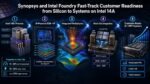
Synopsys and Intel Foundry are expanding their collaboration to accelerate customer adoption of Intel 14A, connecting advanced process technology with production-ready electronic design automation, silicon intellectual property, multiphysics analysis, and multi-die integration. Announced at the 2026 DAC Chips to … Read More
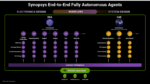
Purple was in fashion at the 2026 Design Automation Conference, where Synopsys reinforced its position at the forefront of AI-powered engineering. Under the conference’s “Chips to Systems” theme, the company showcased intelligent, end-to-end technologies designed to help the semiconductor industry manage unprecedented… Read More
Software defined vehicles (SDVs) are transforming the automotive industry. Today’s vehicles are connected computing platforms that rely on advanced processors, artificial intelligence (AI), over the air (OTA) software updates, cloud services, and vehicle to everything (V2X) communications. Every electronic … Read More
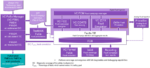
As architects push toward advanced nodes and increasingly demanding workloads, modern silicon design has entered an era of unprecedented complexity. A single design respin can cost millions of dollars and delay market entry. Against this backdrop, designs must be balanced for performance, bandwidth, power efficiency, security… Read More
Synopsys is catalyzing the era of pervasive intelligence with comprehensive engineering solutions spanning silicon design, IP, and simulation and analysis. At this year’s Design Automation Conference (DAC), the company will showcase innovations transforming silicon and systems development for a wide range of applications… Read More
In the early 1980s, when computer-aided engineering (CAE), the precursor to modern electronic design automation (EDA), was just taking shape, my professional trajectory shifted in a way that would prove foundational. I joined Teradyne, the Boston-based leader in automated test equipment (ATE), and I encountered for the first… Read More
Synopsys Foundation IP for Intel 18A is a portfolio of semiconductor building blocks designed to help system-on-chip developers build advanced chips with better power, performance, and area, often called PPA. The offering includes embedded memory compilers, standard-cell logic libraries, and input/output libraries for… Read More
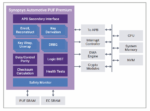
For the past decade, the semiconductor industry has been moving in one direction: shift-left, specifically, shifting more validation into the pre-silicon phase. The idea was straightforward: if software ultimately determines how a system behaves, then software should become a primary vehicle for verification.
The industry… Read More
What systems can accomplish by combining semiconductors, AI, and software seems at times boundless. Chiplet-based semiconductors deliver this promise, allowing a myriad of complex digital, memory, analog and photonic functions to be condensed into a single semiconductor package for higher performance, lower power consumption… Read More