You are currently viewing SemiWiki as a guest which gives you limited access to the site. To view blog comments and experience other SemiWiki features you must be a registered member. Registration is fast, simple, and absolutely free so please,
join our community today!
WP_Term Object
(
    [term_id] => 157
    [name] => EDA
    [slug] => eda
    [term_group] => 0
    [term_taxonomy_id] => 157
    [taxonomy] => category
    [description] => Electronic Design Automation
    [parent] => 0
    [count] => 4457
    [filter] => raw
    [cat_ID] => 157
    [category_count] => 4457
    [category_description] => Electronic Design Automation
    [cat_name] => EDA
    [category_nicename] => eda
    [category_parent] => 0
    [is_post] =>
)
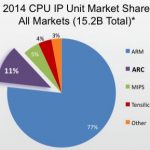
One of the big surprises I got at Synopsys’ ARC conference is that ARC is #2 in terms of share of licensed microprocessor shipments. I think most readers of Semiwiki would know ARM is #1 but would guess that MIPS (now owned by Imagination Technologies) is #2. But you’d be wrong, ARC is over twice as big.
Last week Synopsys… Read More
The internet of things (IoT) has a number of key attributes: low power, security, connectivity. But almost every IoT application involves sensors of one sort or another. The visual sensors are built using CCD arrays, they are basically low-resolution cameras, but the mechanical ones are typically built using MEMS technology.… Read More
Rarely does a month go by without acquisitions in the fabless semiconductor ecosystem. Not surprisingly one of the most read pages on SemiWiki is the EDA Merger and Acquisitions Wiki with more than fifty seven thousand views. It really is a nice family tree, one which we (Daniel Payne) are diligent on keeping current. One of the most… Read More
Re-Thinking Server Designby Alex Lidow on 09-16-2015 at 12:00 pmCategories: EDA
The demand for information is growing at an unprecedented rate. Our insatiable appetite for communication, computing and downloading, is driving this demand. With emerging technologies, such as cloud computing and the internet of things, not to mention the 300 hours of video being loaded to YouTube every minute, this trend … Read More
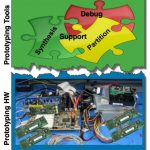
Years ago, when FPGA prototyping started, there were no solutions that you could go out and buy and everything was created as a one-off: buy some FPGAs or an FPGA-based board, and put it all together. It was a lot of effort, nobody really knew in advance how long it would take, there was very limited visibility for debug and the whole … Read More
“All models are wrong, some are useful.” This remark is attributed to the statistician George Box who used it as the section heading in a paper published in 1976.
Just for fun I looked up a few semiconductor statistics from 1976. Total capital spending was $238M in Japan and $306M in US and…that’s it, there was nobody else back then … Read More
Samsung is seemingly ready to move to a new milestone in its brief but exciting system-on-chip (SoC) history: a custom CPU core codenamed Mongoose. It’s going to be based on ARMv8 instruction set and is expected to outperform the Exynos 7420 application processor that Samsung unveiled this year. There are some media reports… Read More
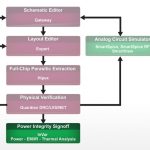
When I designed DRAM chips at Intel back in the 1970’s we didn’t really know what the die temperature would be before taping out silicon, instead we waited for packaged parts to come back and then did our thermal measurements. IC designers today don’t have that luxury of taping out their new SoC without having … Read More
In principle, one way to address variation is to do simulations at lots of PVT corners. In practice, most of this simulation is wasted since it adds no new information, and even so, important corners will get missed. This is what Sifuei Ku of Microsemi calls the British Museum Algorithm. You walk everywhere. And if you don’t walk to… Read More
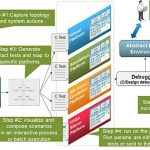
Verification complexity and volume has always been on the rise, taking significant amount of time, human, and compute resources. There are multiple techniques such as simulation, emulation, FPGA prototyping, formal verification, post-silicon testing, and so on which gain prominence in different situations and at different… Read More









Solving the EDA tool fragmentation crisis