




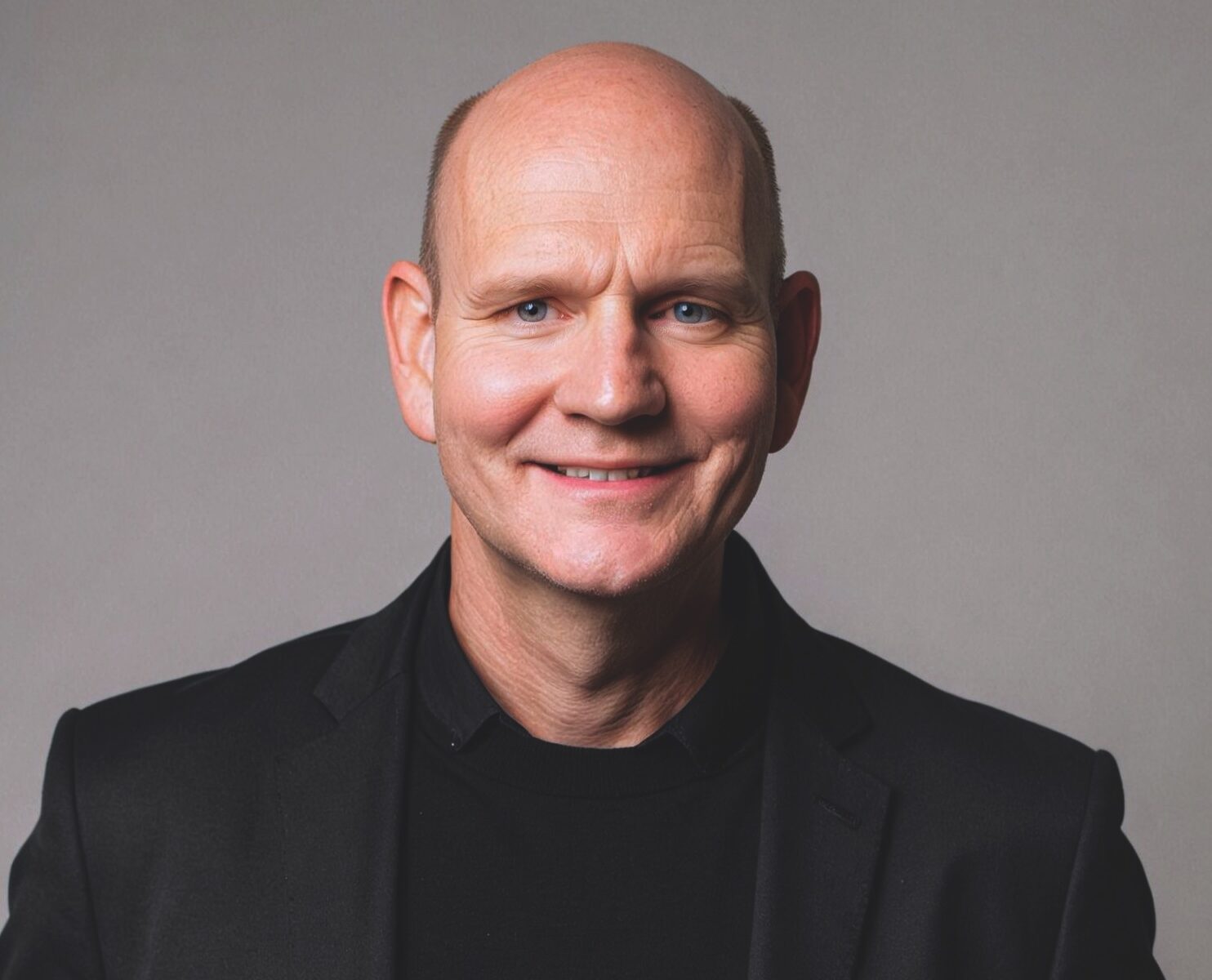




Mike Horton is a co-founder of HYFIX Spatial Intelligence, which builds GNSS hardware for decentralized positioning and timing networks, and GEODNET, the world’s largest decentralized GNSS reference network, and HYFIX Spatial Intelligence, which builds GNSS hardware for decentralized positioning and timing networks.
Tell us about your company?
HYFIX builds American-made chips for drones and autonomous robots. We started the company after spending years watching teams piece together autonomous systems from a pile of disconnected hardware. One vendor handled flight control, another handled GPS, another handled radios, and another handled compute. It works until it doesn’t. The entire stack ends up heavier, more power hungry, harder to secure, and harder to maintain than it should be. We’re replacing that patchwork with a single integrated platform designed specifically for autonomy.
What problems are you solving?
Right now, building a drone still feels more like systems integration than product development. Teams spend enormous amounts of time trying to make different components cooperate, and every additional vendor creates another failure point. If a supplier changes a module, disappears, or gets restricted, entire products can stall. That problem has become impossible to ignore as more of the industry depends on foreign-made hardware. We think the stack needs to get dramatically simpler, smaller, and more resilient if autonomous systems are actually going to scale.
What application areas are your strongest?
A lot of our work centers around drones and robotic systems that need reliable positioning and autonomy outside of perfect lab conditions. That includes inspection drones, mapping and surveying systems, agriculture, public safety, ISR platforms, and lightweight consumer drones. The interesting thing is that these markets all run into the same bottlenecks eventually. Power constraints, unreliable positioning, integration complexity, and systems failing in environments that are less forgiving than a demo field.
What keeps your customers up at night?
Supply chain dependence is a major one. A lot of companies realized they were far more exposed than they thought once geopolitical pressure and FCC restrictions started entering the conversation. Reliability is another. Many autonomous systems still rely on loosely connected stacks that were assembled over time rather than designed as one cohesive platform. Then there’s GPS. People used to treat degraded GPS environments as edge cases. They’re not edge cases anymore.
What does the competitive landscape look like and how do you differentiate?
Most of the industry still treats autonomy as a collection of separate subsystems. You source positioning from one company, radios from another, compute from somewhere else, and then your engineering team spends months trying to hold it all together. We took the opposite approach. We started with the assumption that these systems should have been integrated from the beginning. Our chip combines flight control, positioning, communications, and onboard intelligence into one platform, which cuts weight, lowers power consumption, and removes a lot of the integration pain that slows teams down today. Building it in the U.S. also matters much more now than it did even a few years ago.
What new features or technology are you working on?
Right now we’re focused on getting production-ready chips into customer systems and continuing to improve precision and resilience in difficult operating conditions. We’re integrating with GEODNET’s RTK network and exploring how emerging LEO satellite systems can improve reliability when traditional GPS becomes unstable. We’re also building a sub-250g reference drone because we wanted to demonstrate the platform in a real product instead of just talking about it in architecture diagrams.
How do customers normally engage with your company?
Most conversations start when a team gets tired of fighting its hardware stack. Sometimes they’re trying to reduce weight and power consumption. Sometimes they care about secure communications or GPS resilience. Sometimes they’re simply frustrated by how long integration takes. Usually there’s a moment where they realize they’re spending more time managing component complexity than actually building autonomous capabilities. That’s typically where we come in.
Also Read:
CEO Interview with Daniel Schall of Black Semiconductor
CEO Interview with Vivek Vishwakarma of ThirdAI Automation
CEO Interview with Vivek Raghunathan of Xscape Photonics
Share this post via:



ChipAgent Raises $134Million and Why it Matters