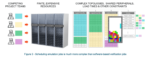
Building a multi-FPGA prototype for SoC verification is complex with many interdependent parts – and is “always on a clock”. The best multi-FPGA prototype implementation is worthless if its not up and running early in the SoC design cycle, where it offers the highest verification ROI terms of minimizing the cost of bug fixes … Read More
Electronic Design Automation
Jade Design Automation’s Register Management Tool
When more than one person is working on any project, coordination is imperative. When the team size grows, being in sync becomes essential. When it comes to SoC design management, registers and bit fields are used to communicate status of results and execute conditional controls. The Register Management function plays an essential… Read More
Using AI in EDA for Multidisciplinary Design Analysis and Optimization
Most IC and system engineers follow a familiar process when designing a new product: create a model, use parameters for the model, simulate the model, observe the results, compare results versus requirements, change the parameters or model and repeat until satisfied or it’s time to tape out. On the EDA side, most tools perform… Read More
The Lines Are Blurring Between System and Silicon. You’re Not Ready.
3D-ICs bring together multiple silicon dies into a single package that’s significantly larger and complex than traditional systems on a chip (SoCs). There’s no doubt these innovative designs are revolutionizing the semiconductor industry.
3D-ICs offer a variety of performance advantages over traditional SoCs. Because … Read More
Cadence Execs Look to the Future
Everything is becoming digital, and everything digital requires semiconductors. Cadence’s President and CEO, Dr. Anirudh Devgan, highlighted this at the recent CadenceLIVE user conference and discussed many of the company’s accomplishments and future directions. Dr. Devgan also sees the emergence of data—especially … Read More
Using IP-XACT, RTL and UPF for Efficient SoC Design
The ESD Alliance collects and reports every quarter the revenue trends for both EDA and Semiconductor IP (SiP), and the biggest component for the past few years has been the SiP, as IP re-use dominates new designs. For Q4 of 2021 the total SiP revenue was $1,314.3 Million, enjoying a 24.8% growth in just one year. Here’s a chart… Read More
Using an IDE to Accelerate Hardware Language Learning
Recently, in one of my regular check-ins with AMIQ EDA, I was pleased that they linked me up with an active customer. The resulting post summarized my discussion with three engineers from Kepler Communications Inc. They talked about using one of the AMIQ EDA products in the design of FPGAs for space-borne Internet connectivity.… Read More
Stalling to Uncover Timing Bugs. Innovation in Verification
Artificially stalling datapaths and virtual channels is a creative method to uncover corner case timing bugs. A paper from Nvidia describes a refinement to this technique. Paul Cunningham (GM, Verification at Cadence), Raúl Camposano (Silicon Catalyst, entrepreneur, former Synopsys CTO and now Silvaco CTO) and I continue… Read More
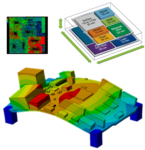
Multiphysics, Multivariate Analysis: An Imperative for Today’s 3D-IC Designs
Semiconductor manufacturers are under constantly increasing and intense pressure to accelerate innovative new chip designs to market faster than ever in smaller package sizes while assuring signal integrity and reducing power consumption. Three-dimensional integrated circuits (3D-ICs) promise to answer all these demands… Read More
Using STA with Aging Analysis for Robust IC Designs
Our laptops and desktop computers have billions of transistors in their application processor chips, yet I often don’t consider the reliability effects of aging that the transistors experience in the chips. At the recent Synopsys User Group (aka SNUG), there was a technical presentation on this topic from Srinivas Bodapati,… Read More


AI Bubble?