You are currently viewing SemiWiki as a guest which gives you limited access to the site. To view blog comments and experience other SemiWiki features you must be a registered member. Registration is fast, simple, and absolutely free so please,
join our community today!
WP_Term Object
(
    [term_id] => 157
    [name] => EDA
    [slug] => eda
    [term_group] => 0
    [term_taxonomy_id] => 157
    [taxonomy] => category
    [description] => Electronic Design Automation
    [parent] => 0
    [count] => 4441
    [filter] => raw
    [cat_ID] => 157
    [category_count] => 4441
    [category_description] => Electronic Design Automation
    [cat_name] => EDA
    [category_nicename] => eda
    [category_parent] => 0
    [is_post] =>
)
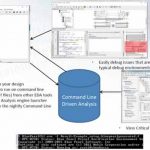
Our previous Blue Pearl post looked at the breadth of contextual visualization capability in the GUI to speed up debug. Two other important aspects of the ASIC & FPGA pre-synthesis workflow are automating analysis with scripts and managing the stream of messages produced. Let’s look at these aspects… Read More
Everyone knows that verification is hard and is consuming an increasing percentage of verification time and effort. And everyone should know that system-level verification (SoC plus at least some software and maybe models for other components on a board) is even harder—which is why you see hand-wringing over how incompletely… Read More
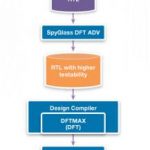
Fed up with ECOing your way out of test problems? You might want to register for this webinar.When you’re building monster SoC FPGAs, you have all the same problems you have with any other SoC. That includes getting to very high test coverage as quickly as you can with a design targeted to the most advanced processes. We’re not just … Read More
In my initial look at ClioSoft’s design management system created from the ground up for the semiconductor industry, I made the opening case for managing and reusing IP across an ASIC design organization. Let’s for a moment say we agree on the need for an enterprise software package to do design management… Read More
At SemiWiki we’ve been blogging for several years now on the semiconductor design challenges of FinFET technology and how it requires new software approaches to help chip designers answer fundamental questions about timing, power, area and design closure. When you mention the phrase Static Timing Analysis (STA) probably… Read More
Who’s doesn’t like a good webinar? I certainly do as it is one of the most time efficient ways to interact with the fabless semiconductor ecosystem, absolutely. Especially when it addresses two of the top trending topics on SemiWiki and they are ARM and FD-SOI. Here is a quick summary of what you will learn:
GLOBALFOUNDRIES… Read More
I talked with Paul Cunningham (VP front-end digital R&D) at CDNLive recently to get a Cadence perspective on digital design trends. He sees needs from traditional semiconductor companies evolving as usual, with disruption here and there from consolidation. But on the system side there is explosion in demand – for wearables,… Read More
We introduced the philosophy behind the Blue Pearl Software suite of tools for front-end analysis of ASIC & FPGA designs in a recent post. As we said in that discussion, effective automation helps find and remedy issues as each re-synthesis potentially turns up new defects. Why do Blue Pearl users say their tool suite is easier… Read More
In one of my whitepapers “SoCs in New Context – Look beyond PPA”, I had mentioned about several considerations which have become very important in addition to power, performance, and area (PPA) of an SoC. This whitepaper was also posted in parts as blogs on Semiwiki (links are mentioned below). Two important… Read More
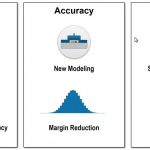
The impact of process variation at advanced nodes is increasing — no surprise there. In recent years, the principal design emphasis to better reflect this variation has been the adoption of two new methodologies: (1) advanced on-chip variation (AOCV, as well as POCV/LVF) for digital static timing analysis, and (2) advanced… Read More








Musk’s Orbital Compute Vision: TERAFAB and the End of the Terrestrial Data Center