You are currently viewing SemiWiki as a guest which gives you limited access to the site. To view blog comments and experience other SemiWiki features you must be a registered member. Registration is fast, simple, and absolutely free so please,
join our community today!
WP_Term Object
(
    [term_id] => 157
    [name] => EDA
    [slug] => eda
    [term_group] => 0
    [term_taxonomy_id] => 157
    [taxonomy] => category
    [description] => Electronic Design Automation
    [parent] => 0
    [count] => 4439
    [filter] => raw
    [cat_ID] => 157
    [category_count] => 4439
    [category_description] => Electronic Design Automation
    [cat_name] => EDA
    [category_nicename] => eda
    [category_parent] => 0
    [is_post] =>
)
Talk to the members of a digital design team and you will always find two types of users. One who likes using the GUI while working on his design and the other who is passionate about using scripts and the command line options. This is akin to the two camps of users who either love either good old Vi/Vim or the ever versatile Emacs editor.… Read More
Data management is one of those core technologies which is absolutely essential in any professional design operation. You must use a data management system; you just want it to be as efficient as possible. Most of us settled on one of a few commercial or open-source options. The problem seemed more or less solved. As usual in chip … Read More
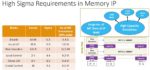
Looking at a typical SoC design today it’s likely to contain a massive amount of memory IP, like: RAM, ROM, register files. Keeping memory close to the CPU makes sense for the lowest latency and highest performance metrics, but what about process variations affecting the memory operation? At the recent DAC conference held… Read More
The semiconductor industry growth is increasing exponentially with high speed circuits, low power design requirements because of updated and new technology like IOT, Networking chips, AI, Robotics etc.
In lower technology nodes the timing closure becomes a major challenge due to the increase in on-chip variation effect and… Read More
Can we detect bugs in post- and pre-silicon testing where we can drastically reduce latency between root-cause and effect? Quick error detection can. Paul Cunningham (GM, Verification at Cadence), Jim Hogan and I continue our series on novel research ideas. Feel free to comment.
The Innovation
This month’s pick is Logic Bug Detection… Read More
One of the most significant and oft repeated trends in EDA is the use of information from layout to help drive other parts of the design flow. This has happened with simulation and synthesis among other things. Of course, we think of test as a physical operation, but test pattern generation and sorting have been netlist based operations.… Read More
I’ll never forget first learning about Xilinx when they got started back in 1984, because the concept of a Field Programmable Gate Array (FPGA) was so simple and elegant, it was rows and columns of logic gates that a designer could program to perform any logic function, then connect that logic to IO pads to drive other chips … Read More
The most obvious question here is “why do I need netlist CDC?” A lot of what you’re looking for in CDC analysis is really complex behaviors, like handshakes between different clock domains, correct gray coding in synchronizing FIFOs, eliminating quasi-static signals and the like. Deeply functional, system-level intent stuff.… Read More
Altair PBS Professional™ is the trusted leader in high-performance computing workload management. It efficiently schedules HPC workloads across all forms of computing infrastructure, and it scales easily to support systems of any size — from clusters to the largest supercomputers.
Scheduling for high-throughput workloads… Read More
Similar to my last post on the HCL DevOps webinar series, I will cover their presentation of HCL Compass in a webinar that was recorded on July 29 about how HCL Compass delivers defect tracking and more.
This webinar was presented by Steve Boone, head of product management at HCL Software DevOps, Howie Bernstein, product manager… Read More







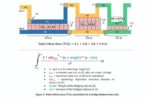
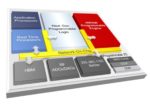
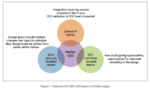


Silicon Insurance: Why eFPGA is Cheaper Than a Respin — and Why It Matters in the Intel 18A Era