You are currently viewing SemiWiki as a guest which gives you limited access to the site. To view blog comments and experience other SemiWiki features you must be a registered member. Registration is fast, simple, and absolutely free so please,
join our community today!
WP_Term Object
(
    [term_id] => 157
    [name] => EDA
    [slug] => eda
    [term_group] => 0
    [term_taxonomy_id] => 157
    [taxonomy] => category
    [description] => Electronic Design Automation
    [parent] => 0
    [count] => 4439
    [filter] => raw
    [cat_ID] => 157
    [category_count] => 4439
    [category_description] => Electronic Design Automation
    [cat_name] => EDA
    [category_nicename] => eda
    [category_parent] => 0
    [is_post] =>
)
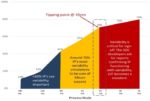
With the slowing down of Moore’s law , the industry as a whole has been working on various ways to maintain the rate of growth and advancements. A lot has been written up about various solutions being pursued to address specific aspects. The current era is being referred to by different names, SysMoore being one that Synopsys uses.… Read More
Tuesday at DAC was actually my very first time attending a technical session, and the presentation from Nebabie Kebebew, Siemens EDA, was called, Mitigating Variability Challenges of IPs for Robust Designs. There were three presentations scheduled for that particular Designer, IP and Embedded Systems track, but with the COVID… Read More
AI for EDA for AIby Daniel Nenni on 12-24-2021 at 6:00 amCategories: Agnisys, AI, EDA
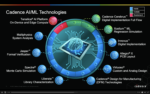
I’ve been noticing over the last few years that electronic design automation (EDA) vendors just love to talk about artificial intelligence (AI) and machine learning (ML), sometimes with deep learning (DL) and neural networks tossed in as well. It can get a bit confusing since these terms are used in two distinct contexts. The first… Read More
Combining simulation and symbolic methods is an attractive way to excite rare branches in block-level verification, but is this method really scalable? Paul Cunningham (GM, Verification at Cadence), Raúl Camposano (Silicon Catalyst, entrepreneur, former Synopsys CTO) and I continue our series on research ideas. As always,… Read More
Cut Out the Cutoutsby Aaron Edwards on 12-23-2021 at 6:00 amCategories: Ansys, Inc., EDA
In 2014, many of the customers that my team and I supported in North America were still using HFSS 3D to model boards and packages. These customers were content with that interface, able to get their models setup quickly, and were okay with the solution times because when HFSS gave them an answer, they knew it was the right answer. I … Read More
The incredible growth that the semiconductor industry has enjoyed over the last several decades is attributed to Moore’s Law. While no one argues that point, there is also industry wide acknowledgment that Moore’s Law started slowing down around the 7nm process node. While die-size reductions still scale, performance jumps… Read More
My third event at DAC on Monday was all about using EDA tools in the Cloud, and so I listened to Craig Johnson, VP EDA Cloud Solutions, Siemens EDA. Early in the day I heard from Joe Sawicki, Siemens EDA, on the topic of Digitalization.
Why even use the Cloud for EDA? That’s a fair question to ask, and Craig had several high-level… Read More
Paul, Raúl and I are having fun with our Innovation in Verification series, and you seem to be also, judging by the hit rates we’re getting. We track these carefully to judge what you find most interesting and what seems to fall more under the category of “Meh”. Paul and others also get informal feedback in client meetings but it would… Read More
Now that the 58th Design Automation Conference held this year in San Francisco has concluded, we take a minute to look back at the results and ascertain what it meant for our company.
Unfortunately, many popular tradeshows held in the time of Covid have suffered a drop in attendance, and DAC was no exception. Despite this however,… Read More
Dan is joined by Dave Kelf, who was recently appointed CEO of Breker Verification Systems. Dave discusses Breker’s unique approach to verification of complex systems, what its future impact will be and what Breker will be doing at DAC.
The views, thoughts, and opinions expressed in these podcasts belong solely to the
…
Read More












Silicon Insurance: Why eFPGA is Cheaper Than a Respin — and Why It Matters in the Intel 18A Era