You are currently viewing SemiWiki as a guest which gives you limited access to the site. To view blog comments and experience other SemiWiki features you must be a registered member. Registration is fast, simple, and absolutely free so please,
join our community today!
WP_Term Object
(
    [term_id] => 6435
    [name] => AI
    [slug] => artificial-intelligence
    [term_group] => 0
    [term_taxonomy_id] => 6435
    [taxonomy] => category
    [description] => Artificial Intelligence
    [parent] => 0
    [count] => 786
    [filter] => raw
    [cat_ID] => 6435
    [category_count] => 786
    [category_description] => Artificial Intelligence
    [cat_name] => AI
    [category_nicename] => artificial-intelligence
    [category_parent] => 0
    [is_post] =>
)
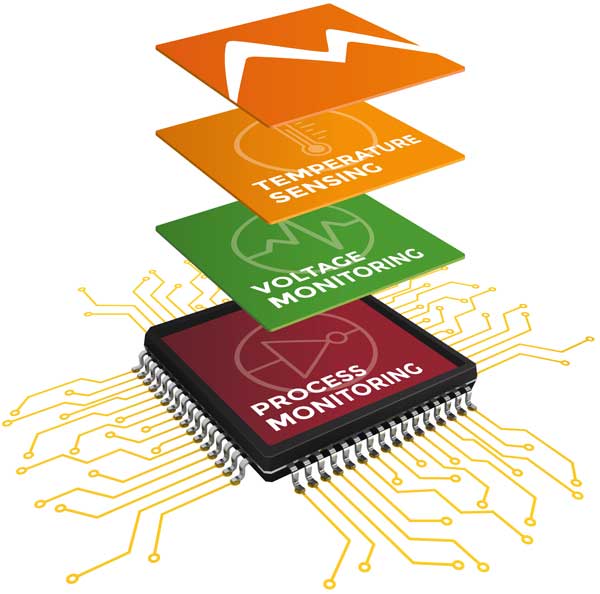
PVT – depending on what field you are in those three letters may mean totally different things. In my undergraduate field of study, chemistry, PVT meant Pressure, Volume & Temperature. Many of you probably remember PV=nRT, the dreaded ideal gas law. However, anybody working in semiconductors knows that PVT stands … Read More
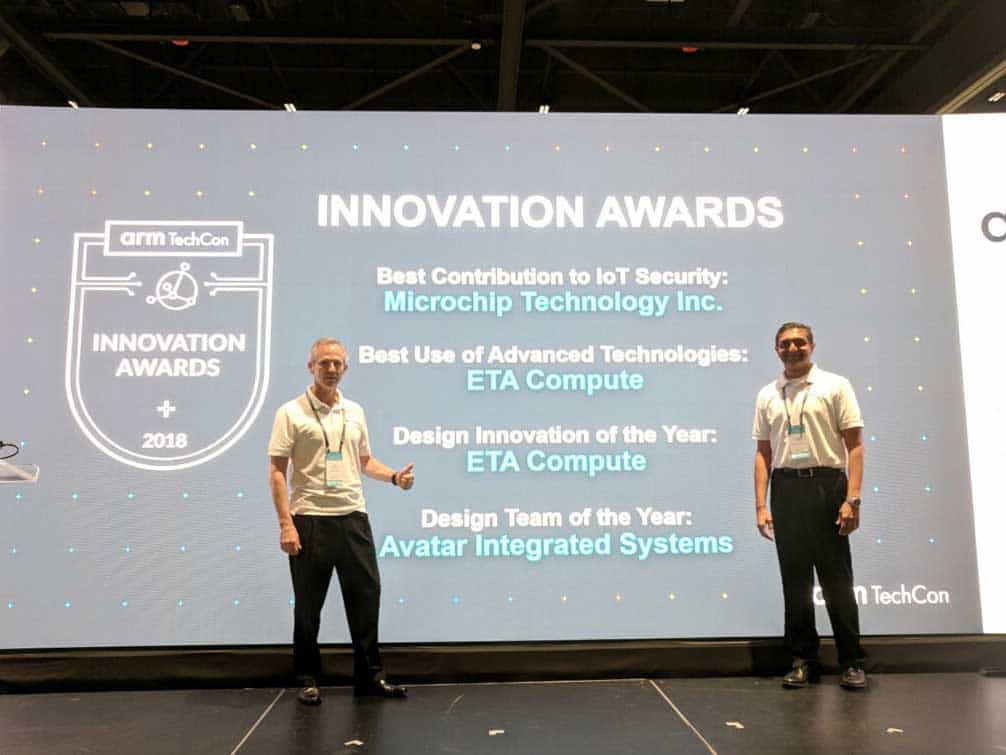
Many startups set out with the goal of accomplishing a technical feat that was previously considered impossible. Quite frankly most do not succeed. Yet, occasionally a company comes along that succeeds with a game changing breakthrough. ETA Compute has done just this. Yet, even more impressively, this 3-year-old company has… Read More
Security and machine learning (ML) are among the hottest areas in tech, especially for the IoT. The need for higher security is, or should be, blindingly obvious at this point. We struggle to fend off daily attacks even in our mainstream compute and networking environment. How defenseless will we be when we have billions of devices… Read More
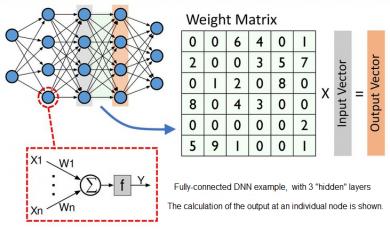
Machine learning applications in data centers (or “the cloud”) have pervasively changed our environment. Advances in speech recognition and natural language understanding have enabled personal assistants to augment our daily lifestyle. Image classification and object recognition techniques enrich our social media experience,… Read More
I think we’re all familiar with the cloud/edge debate on where intelligence should sit. In the beginning the edge devices were going to be dumb nodes with just enough smarts to ship all their data to the cloud where the real magic would happen – recognizing objects, trends, need for repair, etc. Then we realized that wasn’t the best… Read More
In the wake of TSMC’s recent Open Innovation Platform event, I spoke to Frank Ferro, Senior Director of Product Management at Rambus. His presentation on advanced memory interfaces for high-performance systems helped to shed some light on the evolution of system memory for leading edge applications. System implementers now… Read More
Tom Dillinger and I attended the Silvaco SURGE 2018 event in Silicon Valley last week with several hundred of our semiconductor brethren. Tom has a couple blogs ready to go but first let’s talk about the keynote by Silvaco CEO David Dutton. David isn’t your average EDA CEO, he spent the first 8 years of his career at Intel then spent … Read More
The Cadence Tensilica DNA100 DSP IP core is not a one-size-fits-all device. But it’s highly modular in order to support AI processing at the edge, delivering from 0.5 TMAC for on-device IoT up to 10s or 100 TMACs to support autonomous vehicle (ADAS). If you remember the first talks about IoT and Cloud, a couple of years ago, the IoT … Read More
A robust, proven library of IP is a critical enabler for the entire semiconductor ecosystem. Without it, ASIC design is pretty much impossible, given time-to-market pressures. Said another way, designing IP for your next chip simply doesn’t fit the schedule – most teams have barely enough time to integrate and validate pre-existing… Read More
AI is disruptive and transformative to many status quos. Its manifestation can be increasingly seen in many business transactions and various aspects of our lives. While machine learning (ML) and deep learning (DL) have acted as its catalysts on the software side, GPU and now ML/DL accelerators are spawning across the hardware… Read More








Musk’s Orbital Compute Vision: TERAFAB and the End of the Terrestrial Data Center