You are currently viewing SemiWiki as a guest which gives you limited access to the site. To view blog comments and experience other SemiWiki features you must be a registered member. Registration is fast, simple, and absolutely free so please,
join our community today!
            WP_Term Object
(
    [term_id] => 497
    [name] => Arteris
    [slug] => arteris
    [term_group] => 0
    [term_taxonomy_id] => 497
    [taxonomy] => category
    [description] =>
    [parent] => 178
    [count] => 161
    [filter] => raw
    [cat_ID] => 497
    [category_count] => 161
    [category_description] =>
    [cat_name] => Arteris
    [category_nicename] => arteris
    [category_parent] => 178
    [is_post] =>
)

WP_Term Object
(
    [term_id] => 497
    [name] => Arteris
    [slug] => arteris
    [term_group] => 0
    [term_taxonomy_id] => 497
    [taxonomy] => category
    [description] =>
    [parent] => 178
    [count] => 161
    [filter] => raw
    [cat_ID] => 497
    [category_count] => 161
    [category_description] =>
    [cat_name] => Arteris
    [category_nicename] => arteris
    [category_parent] => 178
    [is_post] =>
)
Machine learning (ML), and neural nets (NNs) as a subset of ML, are blossoming in all sorts of applications, not just in the cloud but now even more at the edge. We can now find them in our phones, in our cars, even in IoT applications. We have all seen applications for intelligent vision (e.g. pedestrian detection) and voice recognition… Read More
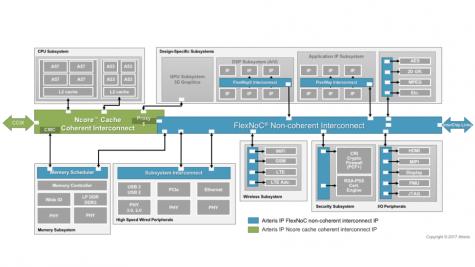
If a CPU or CPU cluster in an SoC is the brain of an SoC, then the interconnect is the rest of the central nervous system, connecting all the other processing and IO functions to that brain. This interconnect must enable these functions to communicate with the brain, with multiple types of memory, and with each other as quickly and predictably… Read More
There are few tech promises these days as prominent as those surrounding driverless cars (trucks, buses, …). But thanks to always-on media amplifiers, it’s not always easy to separate potential from reality. I recently talked to Kurt Shuler, VP Marketing at Arteris, who shared his view after returning from this year’s CES. Kurt… Read More
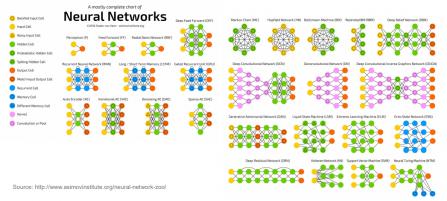
Neural networks make it possible to use machine learning for a wide variety of tasks, removing the need to write new code for each new task. Neural networks allow computers to use experiential learning instead of explicit programming to make decisions. The basic concepts related to neural networks were first proposed in the 1940’s,… Read More
Last week I sat in on Oski’s latest in a series of “Decoding Formal” sessions. Judging by my first experience, they plan and manage these events very well. Not too long (~3 hours of talks), good food (DishDash), good customer content, a good forward-looking topic and a very entertaining wrap-up talk.… Read More
ArterisIP has been a SemiWiki subscriber since the first year we went live. Thus far we have published 61 Arteris related blogs that have garnered close to 300,000 visits making Arteris and NoC one of our top attractions, absolutely.
One of the more newsworthy announcements this week is the addition of Ty Garibay to the Arteris executive… Read More
If you have been following the topic of ISO 26262, you now realize that IP, or even EDA design tools, developed with the highest quality standards still can’t be ISO 26262 certified. Recently I had a conversation with Kurt Shuler from Arteris about this topic. He is VP of Marketing at Arteris, and he is also on several ISO 26262 technical… Read More
The news media has naturally focused on the handful of deaths that have occurred while auto-pilot features have been enabled. In reality, automobile deaths are occurring at a lower rate now than ever. In 2014 the rate was 1.08 deaths per 100 million miles driven. Compare that to the 5.06 per 100M miles in 1960, or a whopping 24.09 in… Read More
Network on chip (NoC) already has a long list of compelling reasons driving its use in large SOC designs. However, this week Arteris introduced their PIANO 2.0 software that provides an even more compelling reason to use their FlexNoC architecture. Let’s recap. Arteris FlexNoC gives SOC architects and designers a powerful tool… Read More
Timing closure is the perennial issue in digital IC design. While the specific problem that has needed to be solved to achieve timing closure over the decades has continuously changed, it has always been a looming problem. And the timing closure problem has gotten more severe with 16/14nm FinFET SoCs due to greater distances between… Read More