You are currently viewing SemiWiki as a guest which gives you limited access to the site. To view blog comments and experience other SemiWiki features you must be a registered member. Registration is fast, simple, and absolutely free so please,
join our community today!
Ever sat around waiting for a time slot on the one piece of big, powerful, expensive engineering equipment everyone in the building wants to use? It’s frustrating for engineers, and a project manager’s nightmare: a tool that can deliver big results, and a lot of schedule juggling.… Read More
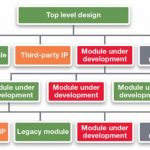
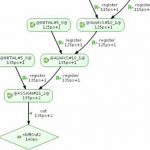
FPGA design today involves not only millions of gates on the target device, but thousands of source files with RTL and constraints, often generated by multiple designers or third party IP providers. With modules organized in some logical way describing the design, designers brace themselves for synthesis and a possible avalanche… Read More
Digital hardware has a habit of deciding – based on the bias and behavior of transistors – to drive outputs to a 0, or a 1, or if commanded a high-impedance Z state. SystemVerilog recognizes a fourth state: X, the “unknown” state a simulator has trouble inferring.
Simulators have a choice. Under X-optimism, they can convert the unknown… Read More
There has been a lot of huffing and puffing lately about 64-bit cores making it into the Apple A7 and other mobile SoCs, and we could probably dedicate a post to that discussion. However, there are a couple other wrinkles to the Apple A7 that should be getting a lot more attention.
There are two primary causes of user frustration in multimedia… Read More
The Internet of Things is on every technology mind these days, but what does it mean for the EDA community? Dennis Brophy of Mentor Graphics says the billions of things we are hearing about will not happen unless we find a way to build a lot more things, efficient things, and connected things. He has more thoughts in our recent interview.… Read More
One of the present ironies of the Internet of Things is as it seeks to connect every device on the planet, we are still designing those things with largely unconnected EDA tools. We may share libraries and source files on a server somewhere, but that is just the beginning of connection.
It is not surprising that synthesis tools from… Read More
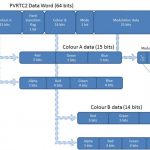
Now that we’ve looked at the basics, we wrap up this three-part series exploring PVRTC texture compression. We’ll take a brief look at PVRTC2, the latest version of the technology, and then explore the issues behind visual quality from several different angles.
PVRTC2 is supported on the newest Series5XT or Series6 GPU cores from… Read More
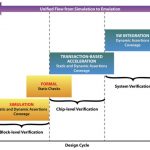
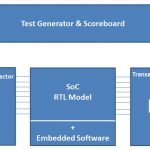
Speaking from experience, it is very difficult to get an OEM customer to talk about how they actually use standards and vendor products. A new white paper co-authored by Broadcom lends insight into how a variety of technologies combine in a flow from IP block simulation verification with assertions to complete SoC emulation with… Read More
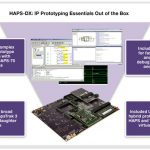
70% of today’s ASIC and SoC designs are being prototyped on FPGAs. Everybody knows that. But, did you know that automating the process of converting what could be thousands of ASIC “golden” files into FPGA-friendly versions can mean big savings in a large design?… Read More
In one of my favorite movies, Brad Pitt utters the only question that matters in baseball or technology management in the face of uncertainty: “Okay, good. What’s the problem?” Not surprisingly in that scene, as the question circles the table of experts used to doing things the old way, not a single one can answer it correctly in the… Read More



















The Invisible Bottleneck Is Costing You Time You Can’t Get Back