You are currently viewing SemiWiki as a guest which gives you limited access to the site. To view blog comments and experience other SemiWiki features you must be a registered member. Registration is fast, simple, and absolutely free so please,
join our community today!
Earlier this Spring, Samsung Foundry held a technology forum, describing their process roadmap and supporting ecosystem developments (link). Recently, the larger Samsung Semiconductor organization conducted a Tech Day at their campus in San Jose, presenting (and demo-ing) a broader set of products. The focus of the day was… Read More
This is what happens when you have a CFO acting as a semiconductor CEO, and Robert Holmes is a career CFO with zero semiconductor experience or education. Granted, no way did he write the opening statement, but it was full of jibber jabber anyway. The real disappointing jibber jabber was from our own Murthy Renduchintala on the status… Read More
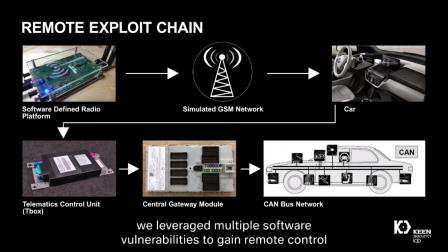
The cybersecurity of automobiles has become an increasingly critical issue in the context of autonomous vehicle development. While creators of autonomous vehicles may have rigorous safety and testing practices, these efforts may be for naught if the system are compromised by ethical or unethical hackers.
Establishing cybersecurity… Read More
Semiconductor stocks have had another significant down leg as the bad news continues to pile on. Bad news in this case doesn’t come in threes , it comes in droves. TI is perhaps very scary news as it is a rather broad based supplier of semiconductors that has fared better than more pure play chip suppliers. TI gave weak guidance… Read More
The “20 Questions with Wally Rhines” series continues
Carl Icahn is a remarkably charming person. You might expect him to be a mean, aggressive adversary but he actually jokes about his foibles, tells stories about interesting people and gently poses questions. “I thought Jerry Yang just didn’t want to sell his Yahoo… Read More
IBIS-AMI Model Generation Simplifiedby Tom Dillinger on 10-25-2018 at 12:00 pmCategories: Cadence, EDA
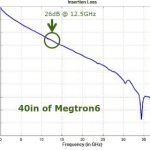
The increasing demand for data communication throughput between system components has driven the requirement for faster SerDes IP data rates. The complexity of the transmit (Tx) and receive (Rx) signal conditioning functions has correspondingly evolved. As a result, the simulation methodology for SerDes electrical interface… Read More
I think we’re all familiar with the cloud/edge debate on where intelligence should sit. In the beginning the edge devices were going to be dumb nodes with just enough smarts to ship all their data to the cloud where the real magic would happen – recognizing objects, trends, need for repair, etc. Then we realized that wasn’t the best… Read More
When TSMC’s annual Open Innovation Platform Exposition takes place, you know it will be time to hear about designs starting on the most advanced nodes. This year we were hearing about 7nm and 5nm. These newer nodes present even more challenges than previous nodes due to many factors. Regardless of what kind of design you are undertaking… Read More
ASIC or FPGA? Each design style has earned designers’ votes depending on the level of urgency, application complexity and funding of their assigned projects. While it is feasible to transition from ASIC to FPGA design or vice versa, such a move is usually done across project refresh instead of midcourse.
Both Xilinx and … Read More
When Western companies moved manufacturing to China, it was all about minimizing costs. China was a developing country with labor costs among the lowest in the world. It also offered massive subsidies and readily turned a blind eye to labor abuse and environmental degradation.
Today, China is the world’s second-largest economy… Read More











Five Billion Pulses Later: What DUV Optics Testing Reveals About Semiconductor Tool Uptime