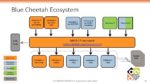



There are many reasons today for dividing up large monolithic SoCs into chiplets that are connected together inside a single package. Let’s look at just some of these reasons. Many SoCs share a common processing core with application specific interfaces and specialized processing engines. Using chiplets would mean that it is… Read More
Silicon Catalyst: Searching for the Next Great Start-upSilicon Catalyst has emerged as a distinctive force…Read More
Revolutionizing Hardware Design Debugging with Time Travel TechnologyIn the semiconductor industry High-Level Synthesis (HLS) and…Read More
Addressing Silent Data Corruption (SDC) with In-System Embedded Deterministic TestingSilent Data Corruption (SDC) represents a critical challenge…Read More
TSMC's 6th ESG AWARD Receives over 5,800 Proposals, Igniting Sustainability PassionTaiwan Semiconductor Manufacturing Company has once again demonstrated…Read More
Tiling Support in SiFive's AI/ML Software Stack for RISC-V Vector-Matrix ExtensionAt the 2025 RISC-V Summit North America, Min…Read MoreS2C Announces 300 Million Gate Prototyping System with Intel® Stratix® 10 GX 10M FPGAs
In 2016 SemiWiki published a book “Prototypical: The Emergence of FPGA-Based Prototyping for SoC Design”. Today we are writing Prototypical II since a LOT of prototyping innovation has happened in the last four years, absolutely.
For example:
Quad 10M Prodigy™ Logic System extends the capacity leadership to simplify… Read More
Combo Wireless. I Want it All, I Want it Now
When we think of wireless it is natural to wonder “which one – cellular, Wi-Fi, BLE?” Our phones support everything but those are pricey devices. What if we wanted the same combo wireless option in a low-cost IoT device, maybe something that only need to send a small amount of data periodically? Logistics applications are a good example.… Read More
Dolphin Design – Delivering High-Performance Audio Processing with TSMC’s 22ULL Process
TSMC held their very popular Open Innovation Platform event (OIP) on August 25. The event was virtual of course and was packed with great presentations from TSMC’s vast ecosystem. One very interesting and relevant presentation was from Dolphin Design, discussing the delivery of high-performance audio processing using TSMC’s… Read More
Highlights of the TSMC Technology Symposium – Part 2
Recently, TSMC held their 26th annual Technology Symposium, which was conducted virtually for the first time. This article is the second of three that attempts to summarize the highlights of the presentations. This article focuses on the TSMC advanced packaging technology roadmap, as described by Doug Yu, VP, R&D.
Key… Read More
In-Chip Monitoring Helps Manage Data Center Power
Designers spend plenty of time analyzing the effects of process, voltage and temperature. But everyone knows it’s not enough to simply stop there. Operating environments are tough and have lots of limitations, especially when it comes to power consumption and thermal issues. Thermal protection and even over-voltage protections… Read More
Inside the HP Nanoprocessor: A High-speed Processor That Can’t Even Add
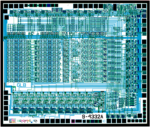
The Nanoprocessor is a mostly-forgotten processor developed by Hewlett-Packard in 19741 as a microcontroller2 for their products. Strangely, this processor couldn’t even add or subtract,3 probably why it was called a nanoprocessor and not a microprocessor. Despite this limitation, the Nanoprocessor powered numerous… Read More
PCI Express in Depth – Transaction Layer
In the last article i write about the Data Link Layer, in this article i’ll write about the Transaction Layer.
This layer’s primary responsibility is to create PCI Express request and completion transactions. It has both transmit functions for outgoing transactions, and receive functions for incoming transactions.… Read More
PCI Express in Depth – Data Link Layer
In the last article, i wrote about the physical layer, now let’s take a look in the next layer the data link layer.
The Data Link Layer serves as the “gatekeeper” for each individual link within a PCI Express system. It ensures that the data being sent back and forth across the link is correct and received in the same order it
Alchip at TSMC OIP – Reticle Size Design and Chiplet Capabilities
This is another installment covering TSMC’s very popular Open Innovation Platform event (OIP), held on August 25. This event presents a diverse and high-impact series of presentations describing how TSMC’s vast ecosystem collaborates with each other and with TSMC. This presentation is from Alchip, presented by James Huang,… Read More


Quantum Advantage is About the Algorithm, not the Computer