





I believe this year’s DAC will be viewed as the time and place where EDA experienced a major shift. That is, the shift from the value of tools and methodology to the value of agentic design flows powered by highly trained agents. The design community will clearly need the tools and methodologies that have occupied DAC for years. But the efficiency and quality that agentic technology can deliver will shift the conversation.
Agentic AI technology went from a curiosity last year to a mainstream topic this year. New companies found their stride at the show and made an impact. The company that seemed to have the broadest footprint (and the largest booth) at the show was ChipAgents. The company showed up in a lot of conversations, announcements and demos. In this post, I’ll examine some of that impact as ChipAgents leads the AI revolution at DAC 2026.
The ChipAgents Footprint
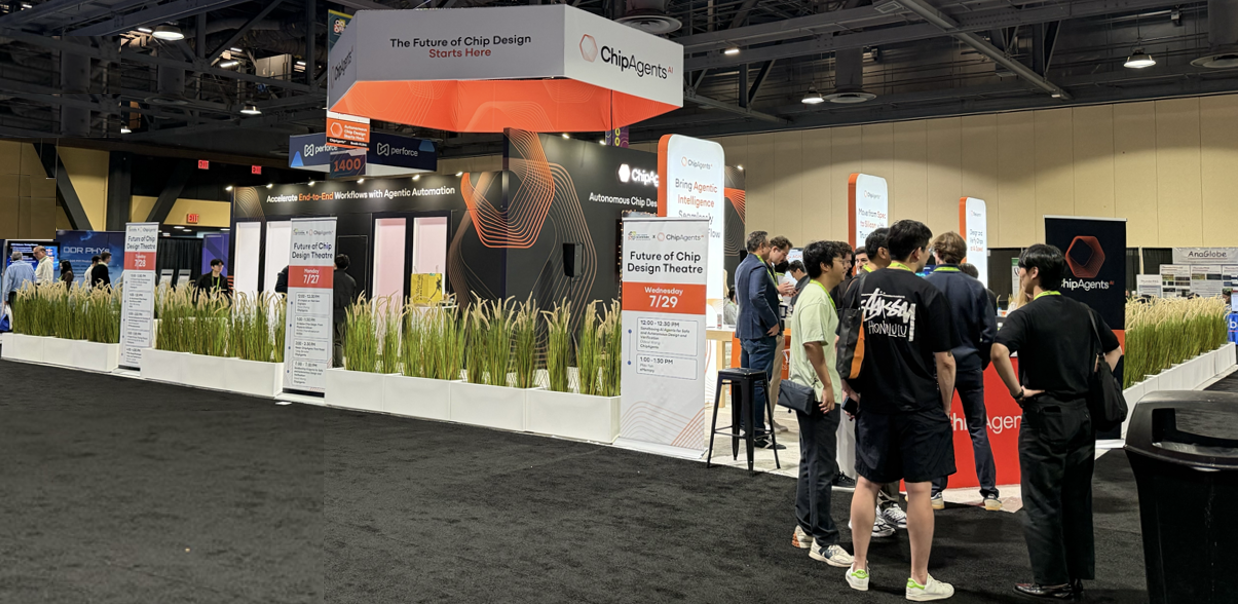
ChipAgents had the largest booth on the DAC show floor this year. For a two-year old startup to occupy this position is very impressive. The large space ChipAgents occupied was put to good use. Here are some of the events held there:
- AI-powered workflows in action: live demos of AI agents as they tackle RTL development, verification, debug, and execute many other complex engineering workflows from end to end.
- The future of chip design, reimagined: ChipAgents’ customers and partners shared success stories, best practices, and insights on how to unleash AI for chip design at the “Future of Chip Design” theatre across three days.
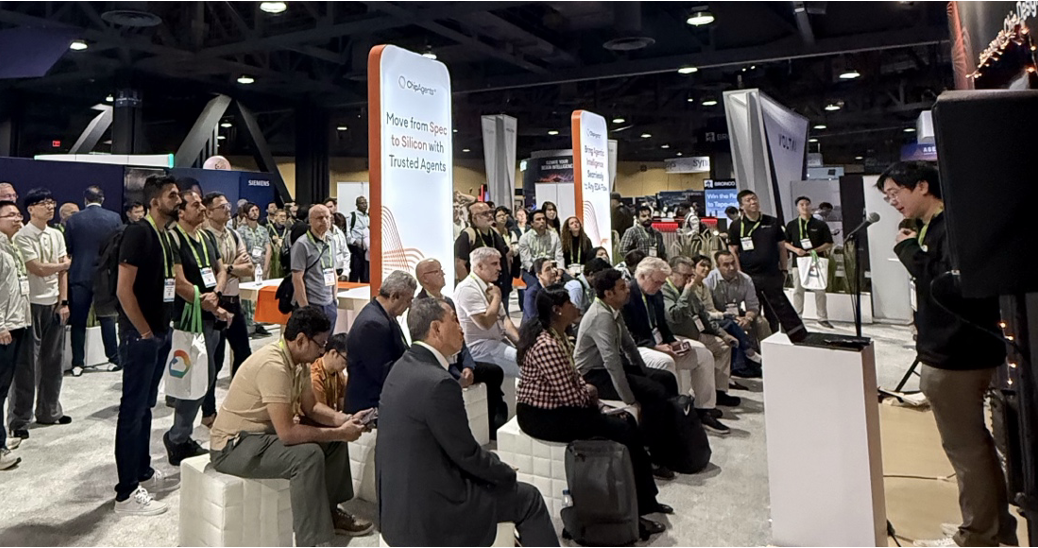
- Explore how to accelerate the path to AI-driven design: 1:1 meetings were held with ChipAgents experts to discuss the most pressing engineering challenges and explore how ChipAgents can help break bottlenecks.
The company also had a strong presence in the DAC program. Teaming with Analog Devices and Micron, several presentations were made on how agentic AI has made a practical impact on production design and verification workflows, including:
- July 27, Monday: Autonomous Root Cause Analysis: Agentic AI for Debugging at Commercial Scale
- July 28, Tuesday: AI Agent-Driven Timing Closure: Autonomous RTL Pipelining Without Functional Verification Bottlenecks
- July 29, Wednesday: From Hype to Impact: Where Agentic AI Actually Delivers Value in Chip Design Today
Announcements
There were also some high-profile announcements from the company. Leading up the show was a press release on July 22 that announced, Ambiq and ChipAgents Collaborate to Advance Agentic AI for Semiconductor Engineering. Ambiq is a leader in ultra-low power edge AI semiconductor solutions. An expanded deployment of the ChipAgents platform was announced following a successful evaluation.
But the big news was announced on July 29, the closing day of exhibits at DAC. ChipAgents Expands Series A Funding to $134 Million as Demand Grows for Agentic AI in Semiconductor Design. The company added $60M to its Series A funding to bring the total to $134M. Not bad for a standing start two years ago. You can read more about the funding announcement on SemiWiki here. Daniel Nenni covered the announcement, and I will simply add his initial comment: “In my 45 years experience in the semiconductor industry … I have never seen such a meteoric rise of an EDA company.”
Like Dan, I’ve seen a lot of achievements in EDA over the years, financial and technical. The combined results on both fronts being delivered by ChipAgents is indeed one for the history books. Before I leave this announcement, one sentence from the release needs repeating:
This financing follows a strong first half of 2026, during which ChipAgents saw 6x growth in ARR and deployed to more than 120 semiconductor companies including MediaTek and Micron. Impressive for sure.
Comments from the CEO

I had a chance to chat with William Wang, CEO and founder of ChipAgents while I was at DAC. William brings a lot to ChipAgents. Beyond his vision and leadership skills, he has a strong connection to academia and advanced research. He is the Mellichamp Endowed Chair Professor of AI and Designs at UC Santa Barbara and a globally recognized leader in artificial intelligence research. He also founded the UCSB Center for Responsible Machine Learning, the Mind and Machine Intelligence Initiative, and the UCSB NLP Group.
Like many AI startups, ChipAgents began by addressing verification and debug. William shared how far the company has come to address end-to-end workflow challenges since those early days. He explained that ChipAgents is not a point tool but rather an AI platform that is model and tooling agnostic. The vision of an end-to-end solution focus was clear after my discussion with William. I can’t wait to see what’s next.
To Learn More
If agentic AI is in your future, you need to know about ChipAgents. You can learn more about this remarkable company on SemiWiki here. And you can explore deeper on the ChipAgents website here, including an opportunity to book a demo. And that’s how ChipAgents leads the AI revolution at DAC 2026.
Share this post via:



Comments
There are no comments yet.
You must register or log in to view/post comments.