You are currently viewing SemiWiki as a guest which gives you limited access to the site. To view blog comments and experience other SemiWiki features you must be a registered member. Registration is fast, simple, and absolutely free so please,
join our community today!
WP_Term Object
(
    [term_id] => 178
    [name] => IP
    [slug] => ip
    [term_group] => 0
    [term_taxonomy_id] => 178
    [taxonomy] => category
    [description] => Semiconductor Intellectual Property
    [parent] => 0
    [count] => 2091
    [filter] => raw
    [cat_ID] => 178
    [category_count] => 2091
    [category_description] => Semiconductor Intellectual Property
    [cat_name] => IP
    [category_nicename] => ip
    [category_parent] => 0
    [is_post] =>
)
Daniel is joined by Dr. Andreas Kuehlmann, General Manager of Security Solutions at Arteris. He has over 35 years of experience in semiconductor design, software, and cybersecurity, including roles at IBM Research, UC Berkeley, Cadence, and Synopsys. Previously, he was CEO of Cycuity, which was acquired by Arteris.
Dan explores… Read More
Author: Trevor Cooper
Lessons from Hands-On DGEMM Benchmarking
Using cycle-accurate simulation to explore how RISC-V vector extensions accelerate one of computing’s most important workloads
1. Why Vector Performance Matters
While GPUs dominate large-scale model training, CPUs execute a vast amount of matrix math in inference… Read More
Among several topics dominating news streams these days, giant datacenters are a leading theme. They point to an AI-centric future while raising real concerns about sustainability and scalability. Certainly land, power and water demand are very present concerns for most of us, witness growing pushback against building new… Read More
As vehicles become increasingly software-defined, automotive semiconductor suppliers face growing pressure to deliver higher compute performance while maintaining strict requirements for power efficiency, reliability, and long-term product support. Advanced driver assistance systems (ADAS), electrification, … Read More
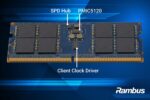
The rapid emergence of AI-enabled personal computers is driving unprecedented demand for higher memory bandwidth, improved signal integrity and greater system reliability. To address these requirements, Rambus has introduced a complete client memory interface chipset for Clocked Unbuffered Dual In-Line Memory Modules… Read More
Weebit Nano has achieved a critical milestone in the commercialization of Resistive Random Access Memory (ReRAM) technology with the successful tape-out of two customer products integrating its embedded non-volatile memory IP. One of the products has already returned first silicon and demonstrated functional operation,… Read More
As advanced packaging becomes a critical enabler for next-generation semiconductor products, Intel continues to drive innovation through its Embedded Multi-die Interconnect Bridge (EMIB) technology. EMIB has emerged as a foundational packaging solution for heterogeneous integration, allowing multiple chiplets and… Read More
The strategic cooperation between Semidynamics and SiPearl to develop a European sovereign rack-scale AI compute platform is important for reasons that extend far beyond technology. It represents a major step toward Europe gaining greater control over its artificial intelligence infrastructure, reducing dependence on… Read More
The transition to advanced process nodes is reshaping high-speed interface IP requirements for mobile, automotive, AR/VR, and AI edge devices. As SoC designers migrate to cutting-edge foundry technologies, the demand for highly optimized MIPI PHY solutions continues to grow. A key development in this space is the availability… Read More
Chips&Media CFrame60 is a next-generation frame compression hardware IP designed to address the growing bandwidth and memory challenges in modern SoCs targeting imaging, video, AI, and display applications. Unlike conventional compression architectures that prioritize either bandwidth reduction or image quality,… Read More














The silent killer of analog reliability: Why SPICE misses floating net