You are currently viewing SemiWiki as a guest which gives you limited access to the site. To view blog comments and experience other SemiWiki features you must be a registered member. Registration is fast, simple, and absolutely free so please,
join our community today!
WP_Term Object
(
    [term_id] => 157
    [name] => EDA
    [slug] => eda
    [term_group] => 0
    [term_taxonomy_id] => 157
    [taxonomy] => category
    [description] => Electronic Design Automation
    [parent] => 0
    [count] => 4439
    [filter] => raw
    [cat_ID] => 157
    [category_count] => 4439
    [category_description] => Electronic Design Automation
    [cat_name] => EDA
    [category_nicename] => eda
    [category_parent] => 0
    [is_post] =>
)
Electronics noise is often described as “white,” spread evenly across a band, typical on older semiconductor processes where thermal and shot noise dominate. As transistors shrink, “pink” 1/f noise takes over at low frequencies – becoming stronger in advanced processes and quantum computing technology. But it’s not an easy… Read More
For the past few decades, System-on-Chip (SoC) has been the gold standard for optimizing the performance and cost of electronic systems. Pulling together practically all of a smartphone’s digital and analog capabilities into a monolithic chip, the mobile application processor serves as a near-perfect example of an SoC. But… Read More
The emergence of 2.5D packaging technology for heterogeneous die integration offers significant benefits to system architects. Functional units may be implemented using discrete die – aka “chiplets” – which may be fabricated in different process nodes. The power, performance, and cost for each unit may be optimized separately.… Read More
RISC-V processor IP is abundant. Open-source code for RISC-V is also widely available, but typically project-based code solves one specific problem. Using only pieces of code, it’s often up to a development team integrate a complete application-ready stack for creating an embedded device. A commercial embedded software development… Read More
Advanced Packaging Analysis at DesignConby Tom Dillinger on 06-07-2022 at 10:00 amCategories: EDA, Xpeedic
The slogan for the DesignCon conference has been “where the chip meets the board”. Traditionally, the conference has provided a breadth of technical presentations covering the design and analysis of high-speed communication interfaces and power integrity evaluations between chip, board, and system.
The recent DesignCon… Read More
With time-to-market pressures ever increasing, companies are continually seeking enhanced designer productivity, faster design closure and improved project management efficiency. To accomplish these, organizations invest a lot in implementing both standardized approaches and proprietary techniques. With ever increasing… Read More
There is no shortage of reporting on the many technological advances happening within the semiconductor industry. But sometimes it feels like we hear less in the area of semiconductor manufacturing equipment than in the design and product arenas. That doesn’t mean that there is less happening there or what is happening there … Read More
The capacity and energy efficiency challenges from the growing appetite for high-speed data along with advanced applications such as LIDAR and quantum computing are driving demand for increasingly large-scale photonic integrated circuits (PIC). With an ever-increasing number of components on a single photonic chip, manual… Read More
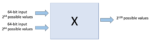
It has been an article of faith that you can’t use formal tools to validate datapath logic (math components). Formal is for control logic, not datapath, we now realize. We understood the reason – wide inputs (32-bit, 64-bit or more) fed through a multiplier deliver eye-watering state space sizes. State space explosions also happen… Read More
I’ve been following the EM/IR (Electro-Migration, IR is current and resistance) analysis market for many years now, and recently attended a presentation from Steven Chin, Sr. Director IC Engineering of Efinix, at the User2User event organized by Siemens EDA. The Tuesday presentation was in the morning at the Marriott… Read More







Silicon Insurance: Why eFPGA is Cheaper Than a Respin — and Why It Matters in the Intel 18A Era