You are currently viewing SemiWiki as a guest which gives you limited access to the site. To view blog comments and experience other SemiWiki features you must be a registered member. Registration is fast, simple, and absolutely free so please,
join our community today!
WP_Term Object
(
    [term_id] => 157
    [name] => EDA
    [slug] => eda
    [term_group] => 0
    [term_taxonomy_id] => 157
    [taxonomy] => category
    [description] => Electronic Design Automation
    [parent] => 0
    [count] => 4551
    [filter] => raw
    [cat_ID] => 157
    [category_count] => 4551
    [category_description] => Electronic Design Automation
    [cat_name] => EDA
    [category_nicename] => eda
    [category_parent] => 0
    [is_post] =>
)
I was at DesignCon in Santa Clara today and listened to Jonah Alben of NVIDIA’s keynote on what their approach is to improving design methodology. He started by pointing out that most companies underinvest in EDA (and he includes NVIDIA in this). Partially it is complaceny: that last chip taped out so we know we can do it again.… Read More
While the SPIE Advanced Lithography conference is best known for IC manufacturing, computational lithography, mask preparation and other back-end topics, there is also a significant amount of interest in Design for Manufacturing (DFM) at the conference because some litho issues are best (or only) addressed by modifying the… Read More
While founder John Tanner, PhD, got his initial exposure to the TTL Cookbook and CMOS Cookbook as an undergraduate, it was his experience as a Caltech graduate student that forged his early path in EDA. In 1979, while enrolled in a VLSI design course at Caltech, John and his classmates received a pre-print of Carver Mead’s seminal… Read More
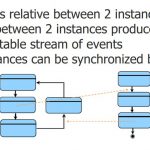
Most embedded programming strategies involve decomposing the embedded application into chunks, which can then be executed as independent tasks. More advanced applications involve some type of data flow, and may attempt to execute operations in parallel where possible.… Read More
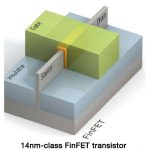
In my opinion, FinFETs will be the most significant piece of technology we, as semiconductor ecosystem people, will experience this decade. Seriously this is exciting stuff and one of the top search terms on SemiWiki for 6 months running. Here is a quick peek at what the top EDA companies will be talking about at the Common Platform… Read More
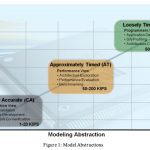
SoC designers have always wanted to simulate hardware and software together during new product development, so one practical question has been how to trade off performance versus accuracy when creating an early model of the hardware. The creative minds at Carbon Design Systems and ARM have combined to offer us some hope and relief… Read More
DesignConis next week in Santa Clara, so today I spoke with Mark Ravenstahlfrom ANSYS to get an idea of what to expect at the conference and trade show.
… Read More
In his blog Coding Horror, Jeff Atwood wrote: “Software developers tend to be software addicts who think their job is to write code. But it’s not. Their job is to solve problems.” Whether the tool is HTML, C, or RTL, the reality is we are now borrowing or buying more software IP than ever, and integrating it into more complex designs,… Read More
Non-volatile memory is used in a wide variety of consumer and industrial applications and comes in an array of architectures like Serial Flash and CBRAM (Conductive Bridging RAM). I caught up with Shane Hollmer by phone this week to gain some insight into a recent acquisition of Atmel’s serial flash components, and how that… Read More
I sat down last week for lunch with Michael Sanie. Mike and I go back a long way, working together at VLSI Technology (where his first job out of school was to take over the circuit extractor that I’d originally written) and then in strategic marketing at Cadence. Now Mike has marketing for (almost?) all of Synopsys’s … Read More











ChipAgent Raises $134Million and Why it Matters