You are currently viewing SemiWiki as a guest which gives you limited access to the site. To view blog comments and experience other SemiWiki features you must be a registered member. Registration is fast, simple, and absolutely free so please,
join our community today!
WP_Term Object
(
    [term_id] => 157
    [name] => EDA
    [slug] => eda
    [term_group] => 0
    [term_taxonomy_id] => 157
    [taxonomy] => category
    [description] => Electronic Design Automation
    [parent] => 0
    [count] => 4610
    [filter] => raw
    [cat_ID] => 157
    [category_count] => 4610
    [category_description] => Electronic Design Automation
    [cat_name] => EDA
    [category_nicename] => eda
    [category_parent] => 0
    [is_post] =>
)
The concept of built-in self-test for electronics has been around for a while. An article in Electronic Design from 1996 declared that, “built-in self-test (BIST) is nothing new.” The memory subsystem is a particularly large and complex part of any semiconductor design, and it’s one that can be particularly vexing to test. Design… Read More
By Ujjwal Negi – Siemens EDA
Multi-die architectures are redefining the limits of chip performance and scalability through the integration of multiple dies into a single package to deliver unprecedented computing power, flexibility, and efficiency. At the heart of this transformation is the Universal Chiplet Interconnect… Read More
Everyone knows design complexity is exploding. What used to be difficult is now bordering on impossible. While design and verification challenges occupy a lot of the conversation, the problem is much bigger than this. The new design and manufacturing challenges of 3D innovations and the need to coordinate a much more complex … Read More
In a bold move that underscores the accelerating convergence of electronic design automation (EDA) and mechanical engineering, Cadence Design Systems announced its agreement to acquire Hexagon AB’s Design & Engineering (D&E) business for approximately €2.7 billion, equivalent to about $3.16 billion. This… Read More
This webinar, in partnership with Easy-Logic Technology, is to address the complexities and challenges associated with functional ECO (Engineering Change Order) in ASIC design, with a particular focus on mixed-signal designs.
The webinar begins by highlighting the critical role of mixed-signal chips in modern applications,… Read More
By Zameer Mohammed
Once a chip is taped out, changes in design are not possible – Silicon is unforgiving, does not allow postproduction modifications. In contrast, software can be updated after release, but chips remain fixed. Static Timing Analysis (STA) signoff serves as a crucial safeguard against silicon failures.
In modern… Read More
The rapid evolution of artificial intelligence (AI) is transforming industries, from autonomous vehicles to data centers, demanding unprecedented computational power and efficiency. As highlighted in Synopsys’ guide, the global AI chip market is projected to reach $383 billion by 2032, growing at a 38% CAGR. This … Read More
By Marko Suominen and Slava Zhuchenya of Siemens Digital Industries Software.
It’s often said that an orchestra without a conductor is just a collection of talented individuals making noise. The conductor’s role is to transform that potential cacophony into a unified, beautiful symphony. The same concept holds… Read More
Wednesday was the last day at #62DAC for me and I attended an Exhibitor Session entitled, Engineering the Semiconductor Digital Thread, which featured Vishal Moondhra, VP Solutions Engineering of Perforce IPLM and Michael Munsey, VP Semiconductor Industry at Siemens Digital Industries. Instead of just talking from slides,… Read More
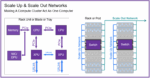
The evolution of hyperscale data center infrastructure to support the processing of trillions of parameters for large language models has created some rather substantial design challenges. These massive processing facilities must scale to hundreds of thousands of accelerators with highly efficient and fast connections.… Read More












Hyper-NA EUV: The Next Frontier in Chipmaking Could Arrive in 2036