You are currently viewing SemiWiki as a guest which gives you limited access to the site. To view blog comments and experience other SemiWiki features you must be a registered member. Registration is fast, simple, and absolutely free so please,
join our community today!
WP_Term Object
(
    [term_id] => 157
    [name] => EDA
    [slug] => eda
    [term_group] => 0
    [term_taxonomy_id] => 157
    [taxonomy] => category
    [description] => Electronic Design Automation
    [parent] => 0
    [count] => 4442
    [filter] => raw
    [cat_ID] => 157
    [category_count] => 4442
    [category_description] => Electronic Design Automation
    [cat_name] => EDA
    [category_nicename] => eda
    [category_parent] => 0
    [is_post] =>
)
By now, you’ve probably seen the news on Synopsys acquiring Coverity, and a few thoughts from our own Paul McLellan and Daniel Payne in commentary, who I respect deeply – and I’m guessing there are many like them out there in the EDA community scratching their heads a little or a lot at this. I’m not from corporate, but I am here… Read More
Mounir Hahad Rejoins Silvacoby admin on 02-20-2014 at 4:16 pmCategories: EDA
Mounir Hahad just joined Silvaco as VP engineering. And when I say joined I really mean rejoined. I had a call with him to find out how that happened.
Mounir studied in France for a PhD in computer science on numerical computing. In 1995 the then-director of TCAD at Silvaco called him up having read some of his published papers. Silvaco… Read More
I’ve run SPICE circuit simulators since the 1970’s and they use transistor models where the device parameters are provided by the foundry. These transistor and interconnect parameters come from an engineer at the foundry who has characterized silicon with actual measurements or by running a TCAD (Technology CAD)… Read More
Synopsys announced this afternoon that they are acquiring Coverity for $375M subject to all the usual reviews.
There are a couple of other big EDA connections. Aki Fujimora, who was CTO of Cadence, is on the board. And Adreas Kuehlmann is the VP of R&D. He used to run Cadence Berkeley Laboratories before moving to the other end… Read More
One SPIE session not to missby Beth Martin on 02-19-2014 at 4:19 pmCategories: EDA, Siemens EDA
The time is nigh for another meeting of the practitioners of the lithographic arts, dark and otherwise, at the SPIE Advanced Lithography symposium.
I love this conference for the engagement you see, both in the sessions and in the hallways. People actually meet and talk and argue. There’s always interesting gossip, exciting technologies,… Read More
Last week, after learning from the press releaseof Carbonabout its rocking sustained growth with record-breaking revenue and a thumping 46% increase in bookings, I was interested to know some more details about what drives Carbon to such an amazing performance in an EDA market that is generally prone to growth of a few percentage… Read More
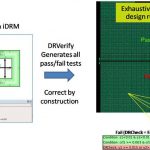
DRVerify is part of the iDRM design rule compiler platform from Sage DA, something that I have been personally involved with for the past three years. DRVerify is mainly used to verify third party design rule check (DRC) decks and ensure that they correctly, completely and accurately represent the design rule specification. In… Read More
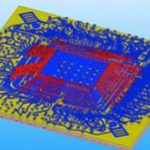
Power delivery networks (PDN) are the metal structures on a chip that delivers the power. In a high-end desktop SoC this might be delivering as much as 150W, and with voltages around 1V that means over 150 amps of current. Clearly getting the PDN correct is critical for a correctly functioning chip. One of the challenges to verifying… Read More
This news is certainly not as amazing that the acquisition of MIPS by Imagination, or Arteris by Qualcomm… but it shows that Cadence is building a complete Interface IP port-folio, brick after brick. The result will be that a complete wall is being built on the Synopsys road to monopoly and complete success on Interface IP market.… Read More
My first introduction to modeling an AMS behavior using a language was back in the 1980’s at Silicon Compilers using the Lsim simulator. Around the same time the VHDL and Verilog languages emerged to handle the modeling of both digital and some analog behaviors. The big reason to model analog behavior with a language is for… Read More










Musk’s Orbital Compute Vision: TERAFAB and the End of the Terrestrial Data Center