You are currently viewing SemiWiki as a guest which gives you limited access to the site. To view blog comments and experience other SemiWiki features you must be a registered member. Registration is fast, simple, and absolutely free so please,
join our community today!
WP_Term Object
(
    [term_id] => 157
    [name] => EDA
    [slug] => eda
    [term_group] => 0
    [term_taxonomy_id] => 157
    [taxonomy] => category
    [description] => Electronic Design Automation
    [parent] => 0
    [count] => 4610
    [filter] => raw
    [cat_ID] => 157
    [category_count] => 4610
    [category_description] => Electronic Design Automation
    [cat_name] => EDA
    [category_nicename] => eda
    [category_parent] => 0
    [is_post] =>
)
Now that we have gone virtual, life has never been easier, for me anyway. There are literally events every day beamed into my living room. The question is which should I attend? The answer is I should attend the ones with the most customer-based content, which is what User2User is all about. I will miss attending this one live as it was… Read More
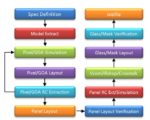
I’ve used OLED (Organic Light-Emitting Diode) displays for many years in my monitors, laptops, tablets, e-readers and smart phones; and knew that the AMOLED (Active-Matrix OLED) displays used thin-film transistor technology where each pixel can be controlled, but I hadn’t considered the actual design process… Read More
There has been a lot written about artificial intelligence/machine learning (AI/ML) and its application in the Cadence digital design flow. Most recently, I covered significant verification efficiency improvements in Xcellium ML. A recent digital-themed white paper from Cadence takes a broader look at the impact of ML on… Read More
Harry Foster and I started in semiconductors at the same time so it was great to reminisce while talking about the latest Wilson Research Group Functional Verification Trend reports. Before I get into the reports lets talk about Harry who is a verification superstar:
Harry is Chief Scientist Verification for the Design Verification… Read More
Introduction
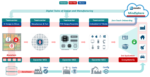
For many years, I pondered the ultimate future of EDA. Companies such as Oracle, SAP and Dassault provide a huge array of enabling software infrastructure for the enterprise, including product design, mechanical design, project management and materials sourcing. But not for the all-important tasks of chip and… Read More
Arm and Mentor Recently announced that the Arm Design Reviews program now offers Mentor help in verification design reviews. I talked to Paul Williams (Sr Consultant and Verification Practice Lead at Mentor Graphics) and Peter Lewin (Dir. Mktg at Arm Partner Enablement Group) to get more insight into Arm Design Services, particularly… Read More
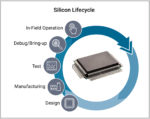
SLM. It’s a TLA (three-letter acronym) that you’ll be hearing more about. It stands for silicon lifecycle management and it has the potential of re-defining the role of EDA in the entire electronics ecosystem. A working definition of SLM is “monitoring, analysis and optimization of semiconductor devices as they are designed,… Read More
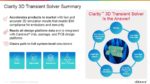
Cadence made waves a while back with its innovative Clarity 3D Solver, a FEM solver for near field EM analysis. Now they are shaking things up with their new far field Clarity 3D Transient Solver. System level EMI and EMC analysis has often exceeded the limits of simulation tools, leading to expensive and time-consuming prototype… Read More
Anyone who frequents SemiWiki will likely know Moore’s Law. The prediction made by Gordon Moore over 50 years ago regarding the relentless increase in transistor density and reduction in cost has tracked well for a very, very long time. In recent years, there has been spirited discussion about the end of Moore’s Law. This is a discussion… Read More
Hands down, without a doubt, the most interesting CEO in semiconductors is Lip-Bu Tan, founder of Walden Capitol and current CEO of Cadence Design Systems. If you want to talk about a man with a plan it’s Lip-Bu Tan.
Before we get into the fireside chat between Tom Caufield and Lip-Bu at the GTC 2020 Virtual event let’s do a quick biography:… Read More











The silent killer of analog reliability: Why SPICE misses floating net