You are currently viewing SemiWiki as a guest which gives you limited access to the site. To view blog comments and experience other SemiWiki features you must be a registered member. Registration is fast, simple, and absolutely free so please,
join our community today!
WP_Term Object
(
    [term_id] => 157
    [name] => EDA
    [slug] => eda
    [term_group] => 0
    [term_taxonomy_id] => 157
    [taxonomy] => category
    [description] => Electronic Design Automation
    [parent] => 0
    [count] => 4440
    [filter] => raw
    [cat_ID] => 157
    [category_count] => 4440
    [category_description] => Electronic Design Automation
    [cat_name] => EDA
    [category_nicename] => eda
    [category_parent] => 0
    [is_post] =>
)
I don’t look at the RTL power estimation topic too often these days, so I was interested to see that ANSYS still has a very strong position in this area. Qualcomm is using PowerArtist on one of the most demanding modern applications – mobile GPU power gaming. Mobile gaming heavily loads the GPU, so any optimization in that area will … Read More
In this interview we talk with Sam Mahalingam, chief technology officer at Altair, about gaining a competitive edge with software that’s built to handle high-throughput workloads like chip design and electronic design automation (EDA). Altair is a global technology company providing solutions in product development, high-performance… Read More
Let me introduce John O’Donnell, CEO of yieldHUB. After earning a degree in microelectronics John spent 18 years at Analog Devices before founding yieldHUB in 2005. If anybody knows yield it is Analog Devices having shipped billions upon billions of chips, absolutely.
SemiWiki will be digging deeper into the technology… Read More
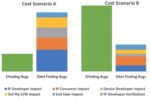
A paper was published last month on the Acuerdo Consultancy Services website authored by Joe Convey of Acuerdo and Bryan Dickman of Valytic Consulting. Joe and Bryan spent combined decades in the Semi and EDA World which means they have a great understanding of hardware bugs first hand, absolutely.
Here is a quick summary… Read More
I believe I asked this question a year or two ago and answered it for the absolute bleeding edge of datacenter performance – Google TPU and the like. Those hyperscalars (Google, Amazon, Microsoft, Baidu, Alibaba, etc) who want to do on-the-fly recognition in pictures so they can tag friends in photos, do almost real-time machine… Read More
ClioSoft published a white paper recently entitled Best Practices are the Foundations of a Startup. The piece discusses the needs and challenges associated with building a scalable infrastructure to support growth.
Before I get into more details on ClioSoft’s white paper, I would offer my own experience on this topic – the need… Read More
Summary
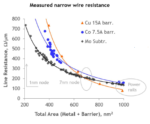
Design Technology Co-Optimization (DTCO) analysis was pursued for library cell PPA estimates for gate-all-around (GAA) devices and new metallurgy options. The cell design and process recommendations are a bit surprising.
Introduction
During the “golden years” of silicon technology evolution that applied Dennard… Read More
As most of you know DVCon 2020 was our first conference to be cut short by the Pandemic. SemiWiki bloggers Bernard Murphy, Mike Gianfagna, and I were there with full schedules but at the last minute it was called off. It really was an eerie feeling, the emptiness of it all.
The rest of our EDA live events followed suit and went virtual … Read More
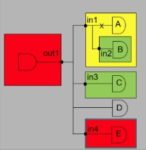
As if engineers did not have enough difficulty just getting everything right so that their designs are implemented functionally correct, the demands of lowering power consumption require changes that can affect functionality and verification. Techniques such as power gating, clock gating, mixed supply voltage, voltage … Read More
Cadence vManager™ Verification Management provides what the company describes as metric-driven signoff. Anyone who has been through the tapeout process for a complex SoC knows the perils of verification sign-off. How much of the chip has been verified? What’s left to do? Will all be ready when the tapeout deadline arrives? … Read More












Silicon Insurance: Why eFPGA is Cheaper Than a Respin — and Why It Matters in the Intel 18A Era