You are currently viewing SemiWiki as a guest which gives you limited access to the site. To view blog comments and experience other SemiWiki features you must be a registered member. Registration is fast, simple, and absolutely free so please,
join our community today!
            WP_Term Object
(
    [term_id] => 58
    [name] => Defacto Technologies
    [slug] => defacto-technologies
    [term_group] => 0
    [term_taxonomy_id] => 58
    [taxonomy] => category
    [description] =>
    [parent] => 157
    [count] => 39
    [filter] => raw
    [cat_ID] => 58
    [category_count] => 39
    [category_description] =>
    [cat_name] => Defacto Technologies
    [category_nicename] => defacto-technologies
    [category_parent] => 157
    [is_post] =>
)

WP_Term Object
(
    [term_id] => 58
    [name] => Defacto Technologies
    [slug] => defacto-technologies
    [term_group] => 0
    [term_taxonomy_id] => 58
    [taxonomy] => category
    [description] =>
    [parent] => 157
    [count] => 39
    [filter] => raw
    [cat_ID] => 58
    [category_count] => 39
    [category_description] =>
    [cat_name] => Defacto Technologies
    [category_nicename] => defacto-technologies
    [category_parent] => 157
    [is_post] =>
)
The ESD Alliance collects and reports every quarter the revenue trends for both EDA and Semiconductor IP (SiP), and the biggest component for the past few years has been the SiP, as IP re-use dominates new designs. For Q4 of 2021 the total SiP revenue was $1,314.3 Million, enjoying a 24.8% growth in just one year. Here’s a chart… Read More
The Accellera organization created the concept of a Unified Power Format (UPF) back in 2006, and by 2007 they shared version 1.0 so that chip designers would have a standard way to communicate the power intentions of IP blocks and full chips. By 2009 the IEEE received the Accellera donation on UPF , reviewed multiple drafts and published… Read More
Standards help our EDA and IP industry grow more quickly and with less CAD integration efforts, and IP-XACT is another one of those Accellera standards (1685-2009) that is coming of age, and enabling IP reuse for SoC design teams. Here at SemiWik, we’ve been writing about Defacto Technologies and their prominent use of IP-XACT… Read More
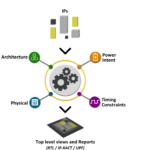
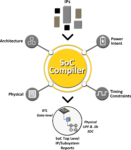
Defacto SoC Compiler whose 9.0 release was announced recently automates the SoC design creation from the first project specifications. It covers register handling, IP and connectivity insertion at RTL, UPF and SDC file generation right to logic synthesis. As part of the generation process of RTL and design collaterals, basic… Read More
I read the semiconductor press, LinkedIn and social media (Twitter, Facebook) every morning along with an RSS feed that I setup, staying current on everything related to using EDA tools to make the task of SoC design a bit easier for design teams. A recent press release announced a tool called SoC Compiler, so my curiosity was piqued… Read More
“For more than 18 years, we never stopped innovating at Defacto. We are aware of EDA Mantra “Innovate or Die!”. Innovation is in our DNA, and we never stopped adding new automated capabilities to the SoC design community to help facing complexity and cost challenges, which increase every year.”
Before founding Defacto… Read More
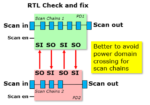
In the early days of Atrenta I met with Ralph Marlett, a distinguished test expert with many years of experience at Zuken and Recal Redac. He talked me into believing we could do meaningful static analysis for DFT-friendliness at RTL. His work with us really opened my eyes to the challenges that test groups face in integrating their… Read More
I’ve talked before about how Defacto provides a platform for scripted RTL assembly. Kind of a rethink of the IP-XACT concept but without need to get into XML (it works directly with SV), and with a more relaxed approach in which you decide what you want to automate and how you want to script it.
They’re hosting a webinar on May 28th 10-11am… Read More
I’ve talked with Defacto on and off for several years – Chouki Aktouf (CEO) and Bastien Gratreaux (Marketing). I was in a similar line of business back in Atrenta. Now I’m just enjoying myself, I’ve written a few blogs for them. I’ll confess I wondered why they wouldn’t struggle with the same problems we’d had. Script-driven RTL editing,… Read More
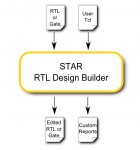
DeFacto and their STAR technology are already quite well known among those who want to procedurally apply edits to system-level RTL. I’m not talking here about the kind of edits you would make with your standard edit tools. Rather these are the more convoluted sort of changes you might attempt with Perl (or perhaps Python these days).… Read More