You are currently viewing SemiWiki as a guest which gives you limited access to the site. To view blog comments and experience other SemiWiki features you must be a registered member. Registration is fast, simple, and absolutely free so please,
join our community today!
WP_Term Object
(
    [term_id] => 6435
    [name] => AI
    [slug] => artificial-intelligence
    [term_group] => 0
    [term_taxonomy_id] => 6435
    [taxonomy] => category
    [description] => Artificial Intelligence
    [parent] => 0
    [count] => 940
    [filter] => raw
    [cat_ID] => 6435
    [category_count] => 940
    [category_description] => Artificial Intelligence
    [cat_name] => AI
    [category_nicename] => artificial-intelligence
    [category_parent] => 0
    [is_post] =>
)
On April 8 and 9 Intel held its Intel Vision event in Phoenix Arizona. This is Intel’s premier event for business and technology executive leaders to come together and learn about the latest industry trends and solutions in advancements from client, to edge, to data center and cloud. The theme of this year’s event was Bringing AI … Read More
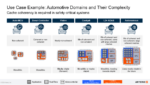
On the heels of Arm’s 2024 automotive update, Arteris and Arm announced an update to their partnership. This has been extended to cover the latest AMBA5 protocol for coherent operation (CHI-E) in addition to already supported options such as CHI-B, ACE and others. There are a couple of noteworthy points here. First, Arm’s new Automotive… Read More
The rapid advancement of technology, including generative AI, IoT, and autonomous vehicles, is revolutionizing industries and enhancing efficiency. At the same time, such advances also generate huge amounts of data to be transmitted and processed to make sense and provide value to consumers and society as a whole. In essence,… Read More
SNUG is the premier event for Synopsys to showcase its technology and impact on the industry. This year’s SNUG did not disappoint. The two-day event packed many fantastic user presentations along with exciting news of innovation from Synopsys. Jensen Huang and Sassine Ghazi even held a live, interactive Q&A session. Compelling… Read More
AI continues to be a fast-moving space and we’re always looking for the next big thing. There’s a lot of buzz now around something called agentic workflows – ugly name but a good idea. LLMs had a good run as the state-of-the-AI-art, however evidence is building that the foundation model behind LLMs alone has limitations, both theoretically… Read More
Earlier this month, SemiWiki wrote about Synopsys’s complete 1.6T Ethernet IP solution to drive AI and Hyperscale Data Center chips. A technology’s success is all about when, where and how it gets adopted within the ecosystem. In the high-speed ethernet ecosystem, the swift adoption of 1.6T Ethernet relies on key roles and coordinated… Read More
After the leadership transition at the top, Synopsys had just a little more than two months before the company’s flagship event, the Synopsys User Group (SNUG) conference. The Synopsys user community and entire ecosystem were waiting to hear new CEO Sassine Ghazi’s keynote to learn where the company is going and its strategic … Read More
More automotive content 😀
In modern cars, safety is governed as much by AI-based functions as by traditional logic and software. How can these functions be fault-graded for FMEDA analysis? Paul Cunningham (GM, Verification at Cadence), Raúl Camposano (Silicon Catalyst, entrepreneur, former Synopsys CTO and now Silvaco CTO)… Read More
A thought leader with demonstrated history in multiple roles- project life cycles, ideation, implementation, and closing projects delivering business value and delighting stakeholders, crafting technical aspects of the company’s strategy for aligning with the business goals perfectly, discovering and implementing … Read More
Next significant automotive blog in a string I will be posting (see here for the previous blog).
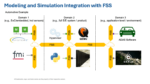
In the semiconductor world, mixed simulation means mixing logic sim, circuit sim, virtual sim (for software running on the hardware we are designing) along with emulation and FPGA prototyping. While that span may seem all-encompassing,… Read More












The silent killer of analog reliability: Why SPICE misses floating net