You are currently viewing SemiWiki as a guest which gives you limited access to the site. To view blog comments and experience other SemiWiki features you must be a registered member. Registration is fast, simple, and absolutely free so please,
join our community today!
WP_Term Object
(
    [term_id] => 6435
    [name] => AI
    [slug] => artificial-intelligence
    [term_group] => 0
    [term_taxonomy_id] => 6435
    [taxonomy] => category
    [description] => Artificial Intelligence
    [parent] => 0
    [count] => 940
    [filter] => raw
    [cat_ID] => 6435
    [category_count] => 940
    [category_description] => Artificial Intelligence
    [cat_name] => AI
    [category_nicename] => artificial-intelligence
    [category_parent] => 0
    [is_post] =>
)
Are you ready to dive into the heart of cutting-edge computing? RISC-V Con 2024 is just around the corner, and we’re thrilled to invite you to a riveting panel discussion that promises to reshape your understanding of advanced computing. On June 11th, from 4:00 to 5:00 PM, at the prestigious DoubleTree Hotel in San Jose, California,… Read More
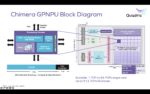
As artificial intelligence (AI) and machine learning (ML) models continue to evolve at a breathtaking pace, the demands on hardware for inference and real-time processing grow increasingly complex. Traditional hardware architectures for acceleration are proving inadequate to keep up with these rapid advancements in ML … Read More
Design & Reuse held its IP-SoC Silicon Valley 24 event on April 25th, 2024, at the Hyatt Regency Santa Clara. The agenda was packed with many relevant and compelling presentations from companies large and small. I attended one presentation on security that stood out for me. Secure-IC presented “AI-powered cybersecurity:… Read More
We have talked about fault localization (root cause analysis) in several reviews. This early-release paper looks at applying LLM technology to the task. Paul Cunningham (GM, Verification at Cadence), Raúl Camposano (Silicon Catalyst, entrepreneur, former Synopsys CTO and now Silvaco CTO) and I continue our series on research… Read More
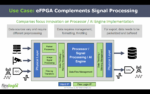
Field-Programmable Gate Arrays (FPGAs) have long been celebrated for their unmatched flexibility and programmability compared to Application-Specific Integrated Circuits (ASICs). And the introduction of Embedded FPGAs (eFPGAs) took these advantages to new heights. eFPGAs offer on-the-fly reconfiguration capabilities,… Read More
Artificial Intelligence (AI) continues to revolutionize industries, from healthcare and finance to automotive and manufacturing. AI applications, such as machine learning, deep learning, and neural networks, rely on vast amounts of data for training, inference, and decision-making processes. As AI algorithms become … Read More
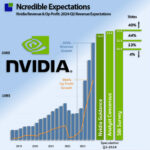
This article previews Nvidia’s earnings release and will be updated during and after the earnings release. As usual, we will compare and contrast the Nvidia earnings with our supply chain glasses to identify changes and derive insights. Please return to this article, as it will be updated over the next week as we progress with our… Read More
Design Productivity Gap
Twenty-five years ago, SEMATECH first alerted the world to a concern known as the design productivity gap: the observation that the ability to manufacture complex chips had started outpacing the capability of designers to create them by more than a factor of two. This concern was subsequently reiterated… Read More
At CadenceLIVE 2024 Anirudh Devgan (President and CEO of Cadence) hosted two fireside chats, one with Jensen Huang (President and CEO of NVIDIA) and one with Cristiano Amon (President and CEO of Qualcomm). As you would expect both discussions were engaging and enlightening. What follows are my takeaways from those chats.
Anirudh
…
Read More
The performance demands of data centers continue to grow, driven to large degree by the ubiquitous use of complex AI algorithms. On April 25, Embedded Computing Design held an informative webinar on this topic. Two experts looked at the problem from the standpoint of processor architecture and communication strategies, which… Read More












The silent killer of analog reliability: Why SPICE misses floating net