You are currently viewing SemiWiki as a guest which gives you limited access to the site. To view blog comments and experience other SemiWiki features you must be a registered member. Registration is fast, simple, and absolutely free so please,
join our community today!
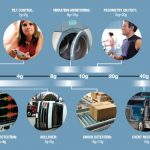
Applications for IoT sensors are becoming more sophisticated, especially for industrial usage. Building optimal sensors for different applications requires multi-domain design, optimization and verification flows. The sensor devices are usually MEMS, and as such have electrical properties that need to be tailored to … Read More
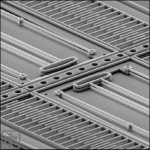
MEMS devices have become extremely important and common. Freescale last year reported its combined MEMS shipments exceeded 2 billion units. If we just examine how many accelerometers we each probably own today, it is easy to see why the market for these products is growing so rapidly. The first and most obvious device is our cell… Read More
For about 5 years now Synopsys has held an HSPICE SIG event in conjunction with DesignCon. It features a small vendor faire with companies that partner with Synopsys on HSPICE flows. They also have a dinner with industry/customer speakers and provide an update on HSPICE development. Lastly there is a Q&A where customers get… Read More
The predominant model for IoT sensor data flow is for data collection on the device and data storage, analysis and access in the cloud. By cloud, I mean that particular vendor’s servers. This is true for Fitbit, Nest, Dropcam,Trace Snow (my favorite skiing app), Smart Things, etc. If you look up IBM’s presumptuously named Internet… Read More
It was back in July of 2012 that the acquisition of Sigrity by Cadence was announced. Although Cadence is a dominant player in both IC and board layout tools, they did not have an electromagnetic (EM) signal integrity solution in their portfolio. This acquisition marks a turning point for the EM/SI sector – tight integration… Read More
ANSYS makes a big deal of being a multi-physics company. Still it has taken them a while to fully integrate Apache. Nevertheless it seems like there is a compelling argument for combining technologies to solve SOC design problems. Frankly most chip designers would be hard pressed to think of a reason for using computational fluid… Read More
In December I signed up for an IoT “lunch and learn” hosted by Mentor Graphics. There were a number of surprising things about the session. The first and most obvious is that it was really a “breakfast-to-lunch and learn”. Starting at 9AM and going through the end of lunch, it was packed full of ‘learning.’ It was also packed full of … Read More
Recently I attended a panel discussion on variability in semiconductor fabrication hosted by Coventor in conjunction with the IEEE IEDM conference in San Francisco. The IEEE bills the conference as “the world’s pre-eminent forum for reporting technological breakthroughs in the areas of semiconductor and electronic device… Read More
Most designers are not using FinFETs yet, however the increased transistor density and power advantages they offer are compelling. Smaller feature sizes have been a consistent driver in semiconductor technology. Eventually the market will move more and more to FinFET processes, increasingly leaving behind planar transistors.… Read More
If you happen to still be looking for a Christmas gift for a tech savvy youth, the answer to your search may be an Arduino. This funny sounding word is the name for a family of easy to use low cost circuit boards and related items used to build projects that contain a microcontroller. With an Arduino it is possible to build projects with… Read More














Silicon Insurance: Why eFPGA is Cheaper Than a Respin — and Why It Matters in the Intel 18A Era