You are currently viewing SemiWiki as a guest which gives you limited access to the site. To view blog comments and experience other SemiWiki features you must be a registered member. Registration is fast, simple, and absolutely free so please,
join our community today!
At the AI Infra Summit 2025 was a panel conversation that captured the semiconductor industry’s anxieties and hopes. The session, titled “The Impact of AI on Semiconductor Startups,” examined how artificial intelligence is transforming not just what chips can do, but how we design them.
The backdrop is stark. Developing a leading-edge… Read More
SiFive, founded by the original creators of the RISC-V instruction set, has become the leading independent supplier of RISC-V processor IP. More than two billion devices already incorporate SiFive designs, ranging from camera controllers and SSDs to smartphones and automotive systems. The company no longer sells its own chips,… Read More
At the recent Hot Chips conference, Intel® unveiled Clearwater Forest, its next-generation Xeon® 6 processor with efficiency cores (E-cores). The unveiling was made by Don Soltis, Xeon Processor Architect and Intel Fellow with over four decades of processor design experience and a long-standing contributor to the Xeon roadmap.… Read More
We are in the midst of one of the most transformative periods for data center infrastructure. The explosion of AI, cloud-scale workloads, and hyperscale networking is forcing rapid innovation not only in compute and storage, but in the very fabric that connects them. At the recent Hot Chips conference, Pat Fleming gave a talk on… Read More
For decades, high-performance CPU design has been dominated by traditional out-of-order (OOO) execution architectures. Giants like Intel, Arm, and AMD have refined this approach into an industry standard—balancing performance and complexity through increasingly sophisticated schedulers, speculation, and runtime … Read More
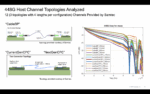
The march toward higher-speed networking continues to be guided by the same core objectives as has always been : increase data rates, lower latency, improve reliability, reduce power consumption, and maintain or extend reach while controlling cost. For the next generation of high-speed interconnects, these requirements … Read More
As embedded systems and System-on-Chip (SoC) designs grow in complexity and integration, the risk of physical attacks has dramatically increased. Modern day adversaries no longer rely solely on software vulnerabilities; instead, they exploit the physical properties of silicon to gain access to sensitive data. Side-channel… Read More
AI’s exponential growth is transforming semiconductor design—and memory is now as critical as compute. Multi-die architecture has emerged as the new frontier, and custom High Bandwidth Memory (cHBM) is fast becoming a cornerstone in this evolution. In a panel session at the Synopsys Executive Forum, leaders from AWS, Marvell,… Read More
The demand for higher performance, greater configurability, and more cost-effective solutions is pushing the industry toward heterogeneous integration and 3D integrated circuits (3D ICs). These solutions are no longer reserved for niche applications—they are rapidly becoming essential to mainstream semiconductor design.… Read More
The semiconductor industry is rapidly moving beyond traditional 2D packaging, embracing technologies such as 3D integrated circuits (3D ICs) and 2.5D advanced packaging. These approaches combine heterogeneous chiplets, silicon interposers, and complex multi-layer routing to achieve higher performance and integration.… Read More





















The silent killer of analog reliability: Why SPICE misses floating net