






The semiconductor industry has long depended on collaboration between technology developers, equipment suppliers and manufacturers. But as artificial intelligence reshapes computing, established ways of working together may no longer be sufficient. The next wave of innovation will depend not just on what companies develop,… Read More

Author: Kalar Rajendiran
From Sequential R&D to Trusted Co-Innovation: The EPIC Model for Semiconductor Innovation

The Industry Challenge: AI Is Forcing Semiconductor Innovation Beyond the Chip

Applied Materials President and CEO Gary Dickerson with the EPIC Center founding partners on October 12, 2026, in Sunnyvale, CA. (Tomas Ovalle/AP Content Services for Applied Materials, Inc.)The bottlenecks are becoming interconnected
Artificial intelligence is changing what the semiconductor industry must deliver. … Read More
Overcoming the Edge AI Power Wall with Low-Voltage Foundation IP
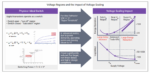
As artificial intelligence (AI) workloads migrate to endpoint hardware, edge AI devices face immense pressure to deliver real-time inference within highly restrictive power and thermal envelopes. Traditional silicon scaling no longer yields the power-density returns it once did. To compensate, engineering teams are turning… Read More
From Blueprint to Production: How Rambus Brings Commercial-Grade Caliptra Security to AI SoCs
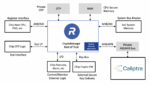
Semiconductor designers today face a critical hurdle: how to smoothly transition from an open-source hardware blueprint to a commercially hardened, production-ready silicon implementation. As semiconductors play an increasingly essential role in powering the AI era, safeguarding these hardware foundations has become… Read More
Managing Power, Performance and Reliability in the Chiplet Era
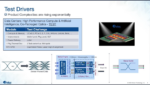
Next-gen AI accelerators, high-performance processors, and complex computing architectures depend heavily on advanced packaging. Bringing multiple dies, chiplets, high-bandwidth memory, and advanced interconnects together into a single 2.5D or 3D package yields massive performance gains. However, this design evolution… Read More
Synopsys Announces AgentEngineer Solutions and Autopilot Platform for Autonomous Engineering
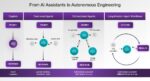
Synopsys today announced its AgentEngineerTM solutions portfolio and AutopilotTM Platform, advancing a fundamental paradigm shift in electronic design automation (EDA): moving beyond AI copilots toward autonomous engineering agents. Following a recent technical briefing with Thomas Andersen, Vice President of AI and… Read More
Tokens Per Watt Over Peak Performance: Retrofitting Heterogeneous Silicon for Production Inference
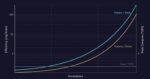
👉 This is Part 2 of an editorial series on the evolving economics of AI inference. If you missed Part 1, where I broke down the shift toward full-system integration, the lessons from the AI Infra Summit, and the “no forks” open-source philosophy, you can read it HERE: Beyond the Accelerator: Why Silicon Challengers … Read More
The Intelligence Revolution: TSMC’s OIP Ecosystem Forges the Path to Trillion-Transistor AI Systems
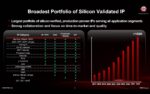
At the 2026 OIP Ecosystem Forum, the industry narrative shifted from incremental scaling to what TSMC defines as the “Intelligence Revolution.” Akin to the 18th-century Industrial Revolution which transitioned human physical labor to mechanical power, the current era is augmenting human ingenuity through … Read More
Beyond the Accelerator: Why Silicon Challengers Must Transition to Full-System Infrastructure
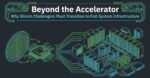
The recent AI Infra Summit was exceptionally jam-packed, filled to the brim with compelling talks, overlapping tracks, and emerging technologies. Amid the noise of the event, there were many excellent presentations detailing the physical realities of scaling hardware. But one presentation in particular caught my attention… Read More
The $9.5 Billion Design IP Market: Shifting Boundaries, Arm’s Monopoly, and the RISC-V Response
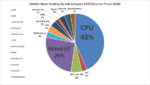
While semiconductor design intellectual property (IP) is a $9.45 billion market, it acts as the absolute architectural bottleneck for the entire global semiconductor value chain. The choices made at the IP layer today dictate the cost, power, and security of a downstream technology economy rapidly marching toward a trillion… Read More







ChipAgent Raises $134Million and Why it Matters