You are currently viewing SemiWiki as a guest which gives you limited access to the site. To view blog comments and experience other SemiWiki features you must be a registered member. Registration is fast, simple, and absolutely free so please,
join our community today!
            WP_Term Object
(
    [term_id] => 14
    [name] => Synopsys
    [slug] => synopsys
    [term_group] => 0
    [term_taxonomy_id] => 14
    [taxonomy] => category
    [description] =>
    [parent] => 157
    [count] => 759
    [filter] => raw
    [cat_ID] => 14
    [category_count] => 759
    [category_description] =>
    [cat_name] => Synopsys
    [category_nicename] => synopsys
    [category_parent] => 157
    [is_post] =>
)

WP_Term Object
(
    [term_id] => 14
    [name] => Synopsys
    [slug] => synopsys
    [term_group] => 0
    [term_taxonomy_id] => 14
    [taxonomy] => category
    [description] =>
    [parent] => 157
    [count] => 759
    [filter] => raw
    [cat_ID] => 14
    [category_count] => 759
    [category_description] =>
    [cat_name] => Synopsys
    [category_nicename] => synopsys
    [category_parent] => 157
    [is_post] =>
)
Last week I sat down and talked to Bijan Kiani of Synopsys. He has marketing responsibility for design implementation products at Synopsys spanning digital, custom and analog mixed signal (AMS).
He was born in Iran and after high school he moved to the UK. He got his PhD degree from University of Edinburgh. It turns out that I was doing… Read More
The CEO Fireside Chats were my very favorite part of #52DAC. Dr. Walden Rhines, Lip-Bu Tan, and Dr. Aart de Geus are heroes of the EDA industry, absolutely. I saw all three Fireside Chats and the one word that I’m left with is INSPIRED! … Read More
In optimizing SoC design for performance, there is so much focus on how fast a CPU core is, or a GPU core, or peripherals, or even the efficiency of the chip-level interconnect. Most designers also understand selecting high performance memory at a cost sweet spot, and optimizing physical layout to clock it as fast as possible within… Read More
High level synthesis (HLS) seems to have been part of the backdrop of design automation for so long that it seems to be one of those things that nobody notices any more. But it has also crept up on people and gone from interesting technology to keep an eye on to getting genuine adoption. The first commercial product in the space was behavioral… Read More
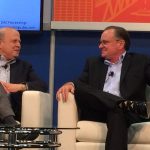
Actually, like anyone who has been in EDA for more than a decade or two (or three) I know quite a bit about Aart. But I still learned quite a bit about his views at the Fireside Chat at DAC where Ed Sperling talked to Aart for three-quarters of an hour.
Aart has a great talent at taking various small trends in the industry and aggregating … Read More
A week ago I was reading an article written by Daniel Nenni where he emphasised about semiconductor acquisitions to fuel innovation. We would see that in a larger space, not only in semiconductor and FPGA manufacturing companies (e.g. Intel and Altera) but also in the whole semiconductor ecosystem. If we see it from technical perspective,… Read More
I was at the DAC kickoff this evening in the Intercontinental Hotel. I was talking to Dave DeMaria, the senior marketing guy at Synopsys and he told me of a couple of minor press releases due to hit the wire tomorrow morning, didn’t sound important enough to be blogworthy. Aart was there too although I didn’t speak to him.… Read More
The Design Automation Conference is the largest and most diverse event in the fabless semiconductor ecosystem. Next week in San Francisco you will see technology and people you have never seen before. You will benefit from the efforts of hundreds of thousands of semiconductor professionals like myself who have dedicated their… Read More
A couple of days ago Synopsys announced that they were acquiring Quotium’s product Seeker. This is an interactive application security testing (IAST) product. Synopsys are acquiring the product and the R&D team, not the whole of Quotium. The Seeker solution is a pioneering solution for IAST that helps businesses find high-risk… Read More
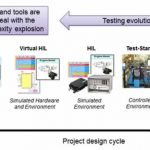
Aerospace and defense applications have traditionally leveraged hardware-in-the-loop (HIL) testing to overcome several issues. A big one is how expensive the physical system is. Even breaking down the system into subsystems for test can still be too expensive when fielding more than a couple test stations. Modeling elements… Read More