You are currently viewing SemiWiki as a guest which gives you limited access to the site. To view blog comments and experience other SemiWiki features you must be a registered member. Registration is fast, simple, and absolutely free so please,
join our community today!
What do genome sequencing, engineering modeling and simulation, and big data analytics have in common? They’re all bandwidth-hungry applications with complex data workloads. High-performance computing (HPC) systems deliver the parallel processing capabilities to generate detailed and valuable insights from these applications.
…
Read More
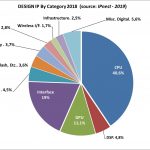
We have seen that the interface IP category is seeing incredibly high growth rate over the last two decades and we expect this category to generate an ongoing high source of IP revenues for at least another decade. But if we dig into the various successful protocols like PCI Express, Ethernet or USB, we can detect a common function … Read More
Alphawave IP is a new member of the SemiWiki community. You can learn about the company and their CEO, Tony Pialis in this interview by Dan Nenni. Design & Reuse did a virtual IP-SOC Conference recently and Tony presented. The D&R event had a very strong lineup of presenters. They supplemented the prepared video presentations… Read More
Tony Pialis is a visionary entrepreneur focused on developing
technologies for next generation connectivity. In the last twenty 20 years, he has co-founded three semiconductor IP companies, all exclusively targeting connectivity IP. Tony is currently the CEO of Alphawave IP Inc, a leader in delivering multi-standard wireline… Read More
Over the years SerDes (serializer/deserializer) based connections have proliferated into just about every connection within and among computing systems. Years ago, parallel interfaces were the most common method of moving data, but issues of signal integrity, synchronization and power simply became too much for the required… Read More
This year is the 25th anniversary for DesignCon. The show has changed a lot over the years. Today, it’s a vibrant showcase of all aspects of advanced product design – from ICs to boards to systems. The show floor reflects the diverse ecosystem. If you missed it this year, definitely plan to go next year.
The DesignCon technical program… Read More
The good news is that the next five DAC events will take place in Moscone Center in San Francisco! If going to Las Vegas from the Bay area is an easy trip, coming from Europe to Las Vegas makes it a 24+hours journey… One obvious consequence was the poor attendance to the exhibition floor. But let’s be positive and notice that the number… Read More
This session will open the DAC IP Track at 10:30 on Monday “How PAM4 and DSP Enable 112G SerDes Design” in Room N264. I am very proud to chair this invited paper session, as it addresses one of the key pieces of design, enabling to exchange data flow at the highest possible data rate. It can be between two chips on the same board, we talk … Read More
A recent press release from eSilicon caught my eye. The company has been touting their 7nm SerDes quite a bit lately – reach, power, flexibility, things like that. While those capabilities are important, any high-performance chip needs to work in the context of the system, which usually contains technology from multiple sources.… Read More
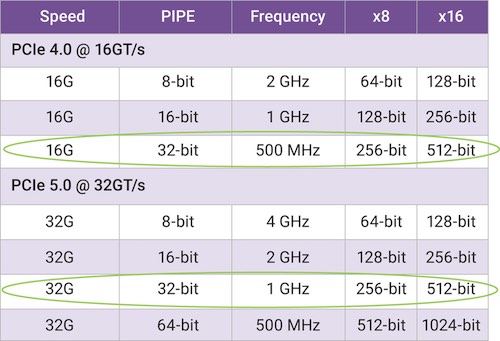
2019 will be a big year for PCIe. With the approval of version 0.9 of the Base Layer for PCIe 5.0, implementers have a solid foundation to begin working on designs. PCIe 4.0 was introduced in 2017, before that the previous PCIe 3.0 was introduced in 2010 – ages ago in this industry. In fact, 5.0 is so close on the heels of 4.0, many products… Read More