You are currently viewing SemiWiki as a guest which gives you limited access to the site. To view blog comments and experience other SemiWiki features you must be a registered member. Registration is fast, simple, and absolutely free so please,
join our community today!
The global semiconductor market is headed for a double-digit decline for the year 2019 after a decline of 15.6% in first quarter 2019 from fourth quarter 2018. According to WSTS (World Semiconductor Trade Statistics) data, this was the largest quarter-to-quarter decline since a 16.3% decline in first quarter 2009, ten years … Read More
Tesla Motors held an investor event at its Palo Alto headquarters. CEO Elon Musk and a series of Tesla executives announced a new in-house developed microprocessor (already in production and being deployed in Tesla vehicles) and its plans and progress toward autonomous vehicle operation.
Tesla Autonomy Day Live Stream
To be … Read More
AI, Machine Learning, Deep Learning and neural networks are all hot industry topics in 2019, but you probably want to know if these concepts are changing how we actually design or verify an SoC. To answer that question what better place to get an answer than from a panel of industry experts who recently gathered at DVcon with moderator… Read More
On March 16, 2019, Google introduced the world to its cloud-based, multi-platform gaming service, Stadia. Described as “a gaming platform for everyone” by Google CEO Sundar Pichai at the Game Developers Conference, Stadia would make high-end games accessible to everyone. The video gaming industry, as we know it, will never … Read More
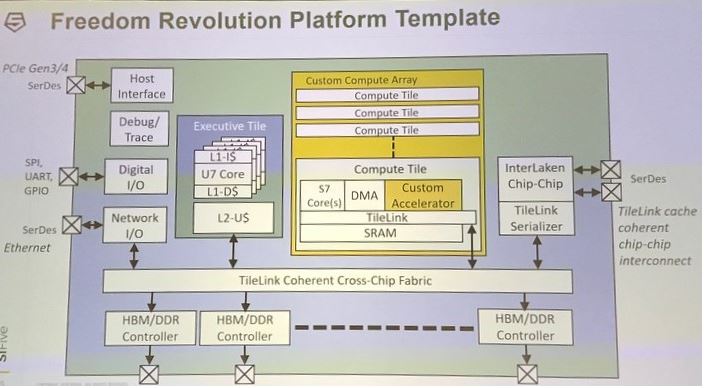
During the afternoon session of the Symposium, Jack Kang, SiFive VP sales then addressed the RISC-V Core IP for vertical markets from consumer/smart home/wearables to storage/networking/5G to ML/edge. Embedding intelligence from the edge to the cloud can occur with U Cores 64-bit Application Processors, S Cores 64-bit Embedded… Read More
IP vendors have always had the inside track on the status of new process nodes and what customers are planning for their next designs. This is even more apparent now that systems companies are successfully doing their own chips by leveraging the massive amounts of commercial IP available today. Proving once again that IP really … Read More
When Nvidia changed its automotive market messaging from an infotainment-centered theme to autonomous driving two years ago – pronouncing the coming tidal wave of robotaxi development – it matched the almost identical epiphany reached by Intel years prior. Automotive infotainment is a low volume, low revenue… Read More
Sweden has embraced the movement toward a cashless society with banks no longer taking cash deposits and retailers, like Ikea, experimenting with cashlessness. Perhaps taking a cue from the Swedish financial sector, Volvo Cars last week revealed its plans for a car-less stand at this week’s L.A. Auto Show – and the co-located … Read More
This is an ongoing conversation inside the semiconductor ecosystem, especially when I am traveling. Everyone wants to know what is going on here or there and since I just returned from Taiwan I will post my thoughts. Last week was also my birthday which was cut short due to the time change but I did get preferential treatment on the … Read More
At #55DAC in SFO the first day is always the busiest on the exhibit floor, so Monday by lunch time I was hungry and took a short walk to the Marriott hotel nearby to listen to AMS experts from several companies talk about their EDA tool use, hosted by Synopsys:
- Samsung
- Toshiba Memory Corp.
- NVIDIA
- Seagate
- Numem
- Esperanto
…
Read More